
 By
By As West Bengal heads into a high-stakes Assembly election, the Bharatiya Janata Party appears to be running a markedly different campaign from its 2021 playbook. This time, the focus has shifted away from headline-grabbing rhetoric to a quieter, more calculated strategy—one that drills down to the level of individual polling booths.
The change is not accidental. After falling short in 2021 despite a strong vote share, the party has reworked its approach, aiming to convert narrow losses into wins. Back then, aggressive messaging targeting Chief Minister Mamata Banerjee helped consolidate her support base, particularly among women and minority voters. The BJP’s internal assessment suggests that while it secured over 38% of the vote, it lost dozens of seats by slim margins—often just a few thousand votes.
This time, the campaign is being recalibrated to close those gaps.
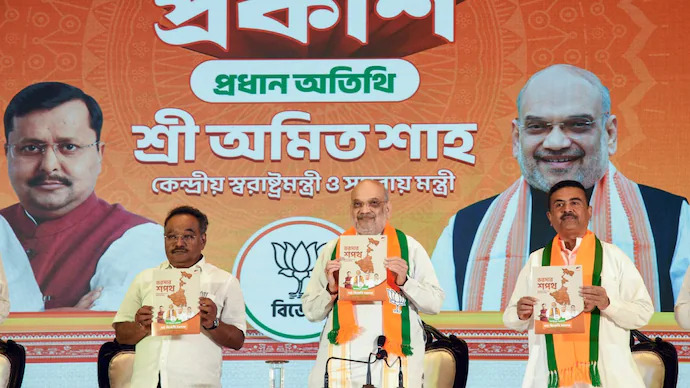
At the centre of this strategy is Union Home Minister Amit Shah, who has taken a hands-on role in shaping the campaign on the ground. Rather than relying solely on large rallies, Shah has focused on building a booth-level network—considered the backbone of electoral success in a state where small vote swings can decide outcomes.
Each Assembly constituency in Bengal typically has 250–300 booths, and many seats are decided by margins as narrow as 1,500 to 5,000 votes. BJP planners have broken this down further: even an addition of 10–15 voters per booth could translate into a decisive advantage. Party workers, under structured systems like the “panna pramukh” model, are being tasked with direct voter outreach—often managing small groups of 50–60 voters each.
Candidate selection has also been tweaked. Unlike in 2021, when the BJP fielded several high-profile defectors and celebrities, the emphasis now is on leaders with local credibility and organisational backing. The idea is simple—strong grassroots presence can mobilise votes more effectively than star appeal.
The messaging, too, reflects this shift. Personal attacks on Banerjee have been toned down, and instead, the BJP is focusing on issues like alleged corruption, welfare delivery gaps, and law and order. The party believes this approach avoids triggering counter-polarisation while keeping the campaign anchored in governance concerns.
Regionally, the strategy varies. In north Bengal—one of the BJP’s strongest zones—the focus is on consolidating its existing base, including communities like the Rajbongshis and tea garden workers. In Jangalmahal, where margins are tighter, the party is banking on incremental gains through targeted outreach.
South Bengal remains more challenging. Here, the BJP’s candidates have historically secured substantial votes but still lost. The new plan is to increase turnout among its supporters and chip away at established vote blocs through focused engagement with women, traders, and lower middle-class voters.
Border districts, influenced by communities such as the Matuas, are another key battleground. The BJP has softened its messaging here, framing issues like citizenship and identity in terms of rights rather than confrontation.
Underlying all of this is a dual strategy—consolidating non-minority votes while hoping for fragmentation among opposition vote banks. Party insiders believe even a small shift in vote share—around 3–5% statewide—could significantly alter the electoral map.
However, challenges remain. All India Trinamool Congress continues to benefit from strong welfare schemes and Mamata Banerjee’s personal appeal as a campaigner. Minority vote consolidation and the BJP’s “outsider” perception could also impact results.
With polling scheduled in two phases on April 23 and 29, and counting on May 4, the BJP’s Bengal experiment is shaping up as a test of whether meticulous booth-level planning can succeed where high-voltage campaigns once fell short.