
 By
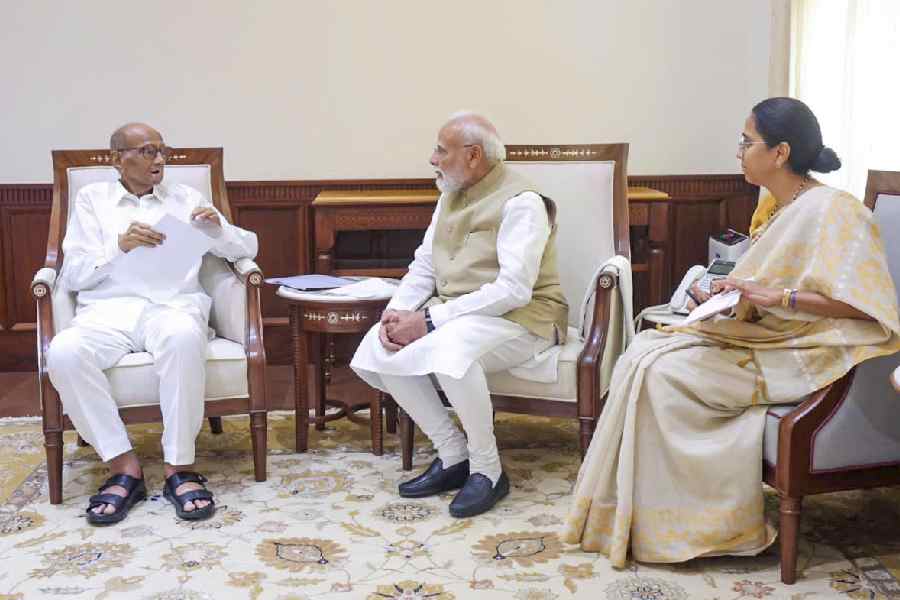
By A meeting between Nationalist Congress Party (Sharad Pawar faction) chief Sharad Pawar, MP Supriya Sule and Prime Minister Narendra Modi on Wednesday drew significant political attention, coming at a time when Opposition parties were protesting outside Parliament over various national issues.
The interaction at the Prime Minister’s Office immediately sparked fresh speculation in political circles, with observers linking the meeting to ongoing discussions around key parliamentary legislation and the evolving political landscape ahead of major legislative decisions.
Photographs released after the meeting showed Prime Minister Modi welcoming Sharad Pawar and the leaders sharing a cordial conversation. During the meeting, Pawar submitted a memorandum highlighting issues affecting farmers, including concerns related to irrigation and the agricultural sector.
The meeting comes as the Centre prepares to pursue support for important legislation during the ongoing Monsoon Session, including the proposed Delimitation Bill, which is expected to require broad parliamentary backing.
With eight Members of Parliament, the NCP (SP) is viewed as an important player in any discussion involving constitutional amendments or legislation requiring a larger parliamentary majority.
Earlier, Supriya Sule had indicated that her party would consider its position on the Delimitation Bill if the government provided a written assurance regarding a proposed 50 percent increase in parliamentary seats across all states.
Political observers have also been discussing reports of possible changes within Maharashtra’s political landscape, including speculation over closer coordination between different political groups. However, no official announcement has been made regarding any future alliance or merger.
According to political sources, the BJP has maintained that any formal alignment involving the NCP would depend on developments within the party itself, particularly regarding the relationship between its two factions. Party leaders have not publicly confirmed any negotiations beyond routine political interactions.
Against this backdrop, Wednesday’s meeting has attracted considerable attention because it took place on a day when Opposition parties intensified their criticism of the government inside and outside Parliament. While the discussions officially focused on farmers’ concerns and irrigation-related issues, the political significance of the high-profile interaction has generated widespread debate across political circles.