 By
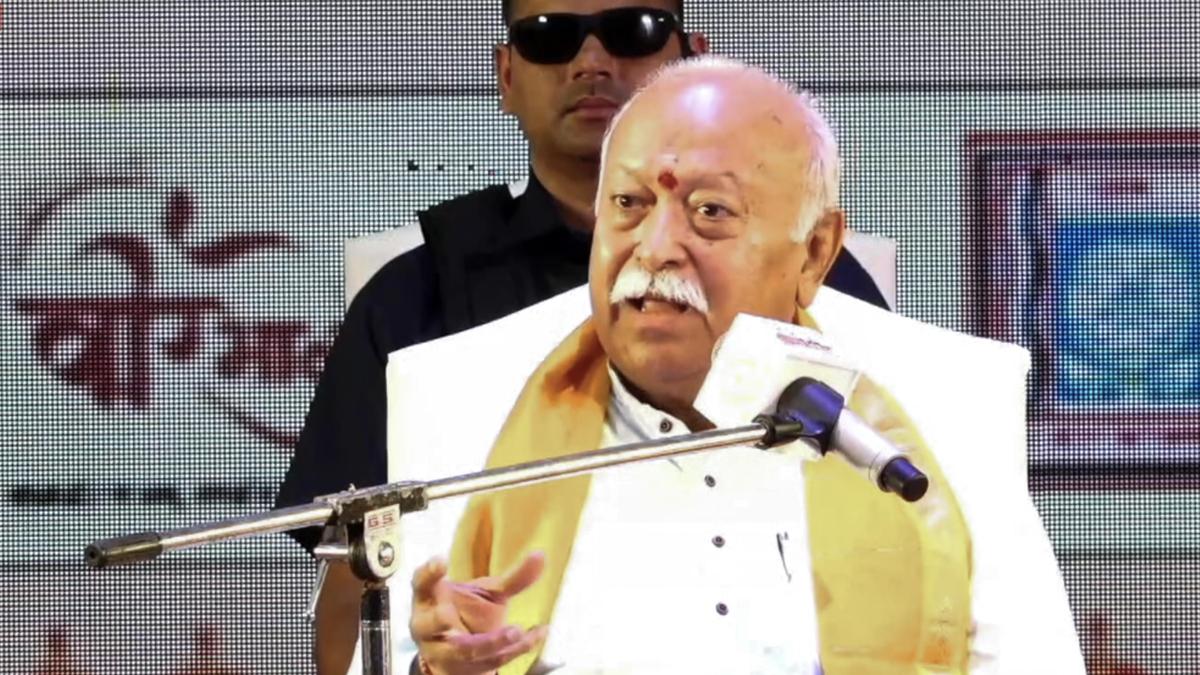
By RSS chief Mohan Bhagwat said India’s understanding of secularism has traditionally been different from the modern Western concept, arguing that equal respect for different religious paths is more consistent with the country’s social and philosophical traditions. Speaking at the Yuva Dharma Sansad in Ujjain, Bhagwat also urged young people to move beyond ego and the belief that they can control everything around them.
Addressing around 1,700 young participants, Bhagwat said dharma offers a broader way of looking at life, combining material well-being with the need to overcome emotions such as anger, greed and jealousy. He said India’s approach to different faiths should be based on non-discrimination and sarva-pantha-samabhava, which he described as equal respect for different religious paths.
Bhagwat began his remarks by cautioning young people against allowing ego to create an illusion of complete control over life. Using the example of the Sun, he said natural forces continue to operate regardless of whether people believe in them. He also reminded the audience that periods of rise are inevitably followed by periods of decline.
The RSS chief then turned to the idea of secularism, describing the modern Western understanding as a product of a particular historical experience that, in his view, does not directly fit India’s context.
Explaining his interpretation, Bhagwat referred to historical conflicts between political rulers and religious authorities in the West over the distribution of power. He said the eventual separation between worldly administration and religious authority shaped the meaning of the term “secular” in that context.
Bhagwat contrasted this with what he described as India’s traditional approach, where dharma is not confined to religious belief but is connected to the broader conduct of individuals and society. He argued that Indian thought seeks both material prosperity and freedom from negative emotions, presenting life as an interconnected whole.
On that basis, Bhagwat said the Western understanding of secularism should not simply be applied to India. He argued that India’s traditional framework is instead rooted in dharma and equal respect for different forms of worship.
He also asked young people to maintain respect for their own chosen form of worship while extending the same respect to the practices and beliefs of others. His remarks placed non-discrimination and coexistence at the centre of his explanation of India’s traditional approach to religious diversity.
Bhagwat on India’s approach to global conflicts
Bhagwat also spoke about India’s response to international conflicts without naming Pakistan directly. Referring to India’s western neighbour, he said the country had faced repeated difficulties but had responded when necessary without seeking to interfere unnecessarily in conflicts elsewhere.
He further said India had extended help even to countries or people who had caused difficulties for it when they faced crises, regardless of the political ideology of the government in power.
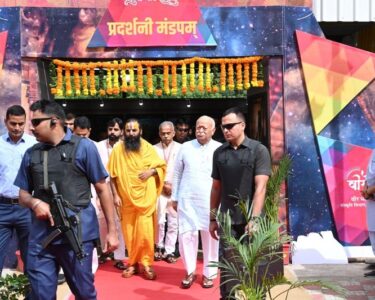
The Yuva Dharma Sansad is being held in Ujjain from September 17 to 19. Organisers said the event has brought together around 1,700 young participants from different parts of the country.