
 By
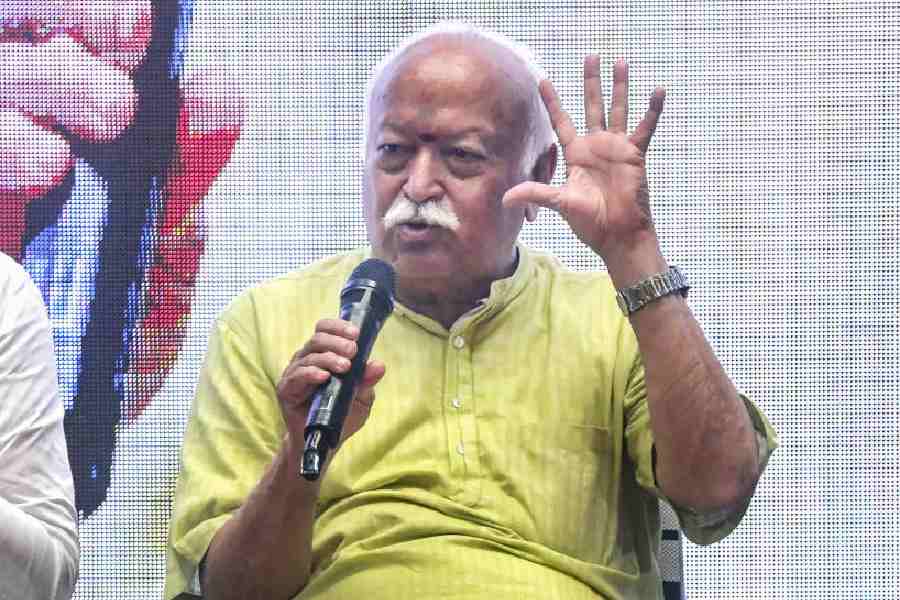
By RSS chief Mohan Bhagwat has stressed that economic growth cannot be considered meaningful if its benefits fail to reach the most vulnerable sections of society. Speaking at an event to mark the birth anniversary of Pandit Deendayal Upadhyaya, Bhagwat said the gap between the most developed and least developed sections of society should be kept as narrow as possible.
Bhagwat was addressing a programme organised by the Deendayal Seva Pratishthan, where he highlighted the principles of Integral Humanism (Ekatma Manav Darshan) and Antyodaya, the idea of prioritising the welfare and upliftment of the person at the bottom of the social and economic ladder. He argued that development planning must place the needs of the poorest sections at its centre.
Bhagwat Calls for Smaller Development Gap
Bhagwat acknowledged that in a country as large and diverse as India, all sections of society may not progress at exactly the same pace. However, he said the difference between those at the highest and lowest levels of development should be reduced as much as possible.
According to Bhagwat, economic growth that remains concentrated among better-off sections cannot by itself be treated as complete national progress. If marginalised communities continue to remain outside the benefits of development, he said, policymakers need to reconsider the approach being followed.
He linked this argument to the broader philosophy of Antyodaya, which places the welfare of the most disadvantaged person at the heart of development.
Six Essentials for a Dignified Life
Bhagwat also drew a distinction between poverty in earlier periods and deprivation in the present context. He said that historically, even economically weaker families in India had access to certain basic resources that allowed them to maintain a dignified life.
He identified six necessities that, in his view, every individual and family should be able to access:
- Adequate food and nutrition
- Clothing
- Shelter
- Basic education required for everyday life
- Healthcare and medical facilities
- The financial ability to extend hospitality to guests and monks
Bhagwat said these essentials should form part of the minimum standard of living for every citizen. He argued that development models should not focus only on economic indicators but also on whether people have the basic conditions needed to live with dignity.
Agriculture Should Serve a Wider Social Purpose
The RSS chief also spoke about agriculture and cautioned against treating farming purely as a commercial activity or business.
He described agriculture as a wider social responsibility linked to human and global well-being. Bhagwat also expressed concern over excessive dependence on chemical-based farming and advocated agricultural practices that are more closely aligned with natural processes and ecological balance.
‘Every Citizen Must Be Empowered’
Concluding his address, Bhagwat placed India’s development within a broader understanding of social welfare. He said prosperity cannot be viewed in isolation when people around us continue to suffer.
His message was that national progress ultimately depends on the well-being and empowerment of individual citizens. According to Bhagwat, making India prosperous and happy requires ensuring that every person has the opportunity and basic resources needed to live with dignity.
The emphasis on the last person in society echoed the central idea of Antyodaya associated with Deendayal Upadhyaya’s philosophy, which Bhagwat highlighted during the programme.