
 By
The violence broke out on Friday night after a 12-hour bandh across Siang, Upper Siang and East Siang districts had largely passed peacefully. According to the Chief Minister’s Office, the unrest continued until around 3.30 am on Saturday. In response to concerns about further incidents, the East Siang district administration imposed restrictions on public gatherings, processions and the carrying of weapons in Pasighat, Mebo and Ruksin.
Political Leaders’ Homes Targeted During Pasighat Violence
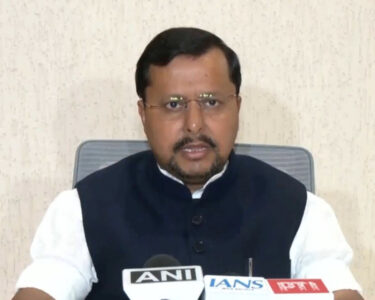
A senior police officer said a mob set fire to an NHPC office and a police station and damaged the homes of BJP state president and former MLA Kaling Moyong, Pasighat West MLA Ninong Ering and MLA Oni Panyang.
The residences of Moyong and Ering were vandalised, while Panyang’s house was also reportedly ransacked. The Chief Minister’s Office said there were reports of looting and theft during the incidents.
Several police personnel sustained injuries after protesters allegedly threw stones at them. The scale of the damage prompted concerns about public safety and the possibility of further violence in the district.
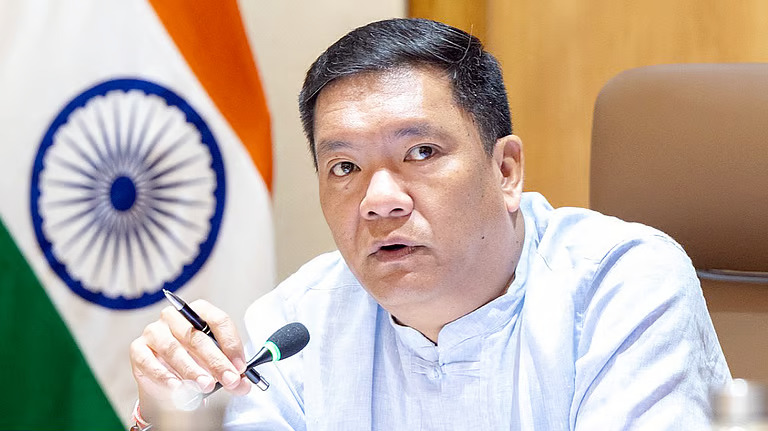
Khandu described the incidents as regrettable and said that while peaceful protest was an essential democratic right, demonstrations must remain within the law. He urged residents, protest groups and community representatives to maintain peace and avoid actions that could threaten lives or damage property.
Khandu Offers Direct Talks on Siang Power Project
Addressing concerns surrounding the proposed Siang Upper Multipurpose Project, Khandu reiterated that his government was willing to engage with organisations and community groups opposed to or concerned about the project.
He said discussions could cover the project’s potential benefits, possible adverse impacts and the apprehensions raised by people living in the region. The Chief Minister stressed that stakeholders should have opportunities to question the government and seek clear answers before reaching their own conclusions.
“The government’s doors are always open,” Khandu said, inviting organisations and associations to discuss the project directly with the state government.
He added that officials had already undertaken outreach efforts and invited stakeholders to meetings. He encouraged representatives to use those opportunities to explain their concerns and obtain clarification from the departments concerned.
Khandu also offered to meet representatives of organisations from the Siang region in Itanagar, Pasighat or any other location convenient to them. He said he was prepared to visit a place proposed by the stakeholders, accompanied by officials from the relevant departments.
Chief Minister Says Public Consensus Is Important
The Chief Minister reiterated that public consensus would remain central to the government’s approach to the project. He called for round-table discussions involving community representatives and other stakeholders to address doubts and improve understanding of the proposal.
Khandu said differences of opinion should be resolved through dialogue and democratic processes rather than violence or activities that could disrupt public order.
His appeal comes amid opposition to the proposed project, with local concerns making consultation and communication important parts of the debate over its future.
East Siang Administration Imposes Restrictions
Following the violence, East Siang Deputy Commissioner and District Magistrate Jayanti Pertin issued an order imposing preventive restrictions under Section 163 of the Bharatiya Nagarik Suraksha Sanhita (BNSS), 2023.
The restrictions took effect at 5 pm on Saturday and will remain in force until they are withdrawn or modified in accordance with the law.
The order followed a report from the East Siang Superintendent of Police about alleged incidents and threats of vandalism and arson targeting public and private property in Pasighat. The district administration cited concerns over further violence, damage to property and risks to human life as reasons for taking preventive action.
Under the order, gatherings of more than five people are prohibited in the notified areas. Acts of vandalism, destruction of public or private property, intimidation, violence and other activities likely to disturb public peace are also banned.
The administration has additionally prohibited the carrying of weapons, including firearms and ammunition, daos, bows and arrows, daggers, knives, axes, hatchets and lathis. The restriction does not apply to weapons authorised for use by security personnel deployed for law-and-order duties.
Processions, rallies, marches, meetings and similar activities require prior permission and written approval from the competent authority.
The restrictions cover Pasighat headquarters, Mebo town and Ruksin town.
Dialogue Remains a Key Test as Tensions Continue
The immediate challenge for the administration is to prevent further violence while creating space for discussions over the proposed power project. Khandu has offered direct engagement with concerned organisations, while the district authorities have introduced restrictions to maintain public order.
Whether those discussions can address local apprehensions will be important to the next phase of the project debate. For now, the government is urging stakeholders to pursue their concerns through dialogue as security measures remain in place across the affected areas.