
 By
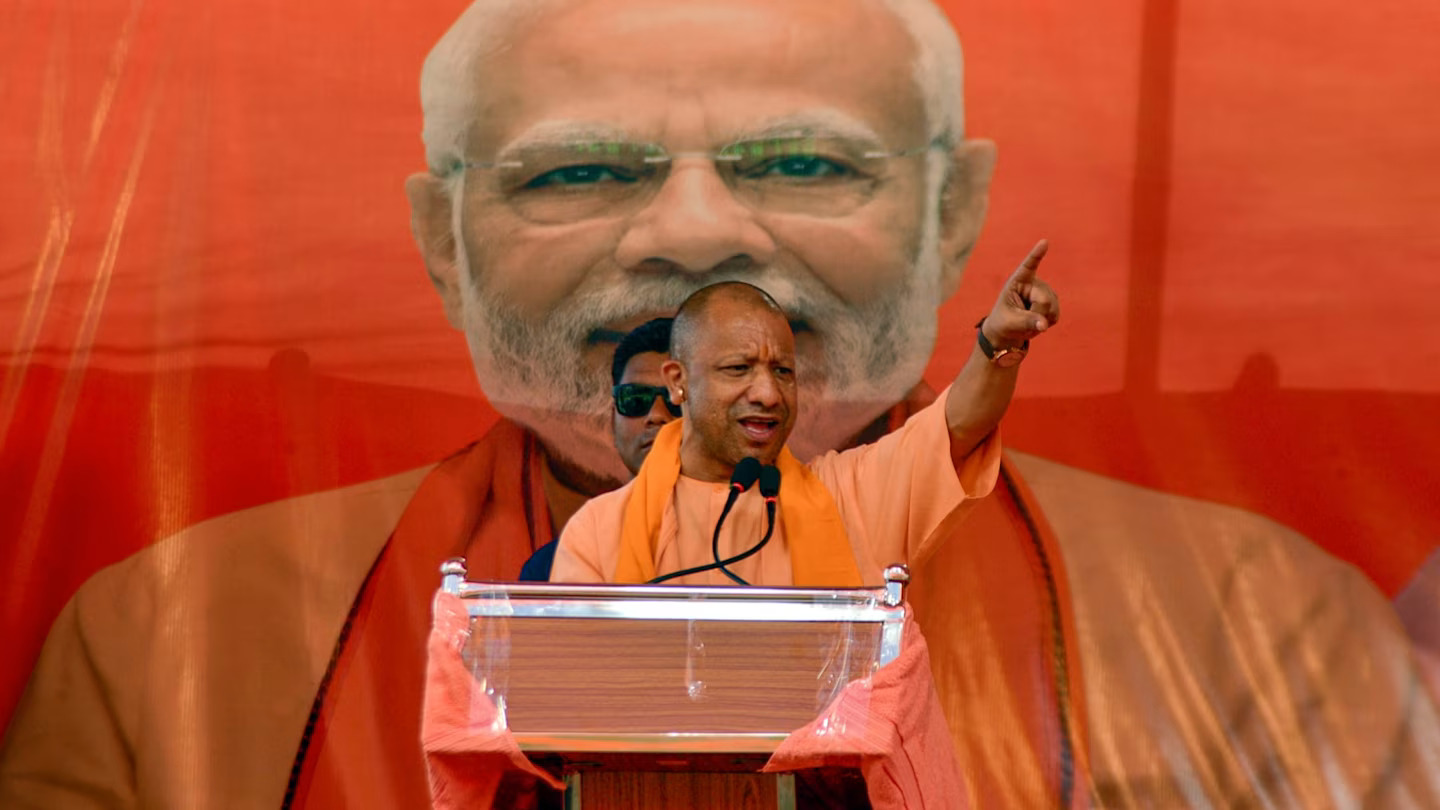
By Uttar Pradesh Chief Minister Yogi Adityanath is increasingly attracting international attention as the BJP prepares for the 2027 Uttar Pradesh Assembly elections. A recent Financial Times profile examines his political rise, governance style and growing prominence within the BJP, while also highlighting the debate over his Hindu nationalist politics and his possible place in the party’s leadership after Prime Minister Narendra Modi.
Adityanath, who has led Uttar Pradesh since 2017, is seeking a third consecutive term in the state. A third victory would further strengthen his position nationally and could place him among the prominent names considered for a future leadership role at the Centre, although the chief minister himself has generally avoided speaking publicly about such ambitions.
Yogi’s rise and his political image
A report by Michael Stott, Andres Schipani and Jyotsna Singh in the Financial Times describes Adityanath as one of the strongest advocates of Modi’s Hindu-first political agenda. The report draws comparisons between the two leaders, particularly their humble backgrounds, emphasis on discipline and carefully cultivated image as leaders focused on public service.
A senior national government official quoted by the newspaper described Adityanath as a “mirror image of Modi”.
The comparison also extends to their communication strategies. Adityanath has built a substantial social media operation around his public appearances, speeches and government projects. His saffron-robed image, combined with frequent messaging around development, law and order and cultural identity, has helped him maintain a strong political presence beyond Uttar Pradesh.
Adityanath, however, remains a polarising figure. His critics have accused him of using divisive and communal rhetoric, particularly on issues involving India’s religious communities. His supporters, meanwhile, point to his emphasis on infrastructure, investment, governance and law and order as evidence of a broader development agenda.
Speaking to the Financial Times, Adityanath defended the relationship between his monastic background and public life.
“Monastic life is not different from community life. It is a medium for us to understand society and its problems,” he said.
Development remains central to Yogi’s pitch
The Financial Times also examined Adityanath’s development record in Uttar Pradesh, a state with a population larger than that of many major countries.
Since taking office in 2017, his government has highlighted road construction, investment, industrial projects and the expansion of infrastructure as major achievements. The newspaper noted that while official economic data largely reflects broader national trends, many residents credit the state government with improvements in development and a decline in crime.
Adityanath has also increasingly stressed his loyalty to Prime Minister Modi and the BJP’s central leadership. According to the report, he has become more cautious when discussing his own political ambitions, particularly in interactions with international media.
The focus on Adityanath comes as the BJP looks ahead to the 2027 Uttar Pradesh election, where his performance will be closely watched not only for its impact on state politics but also for what it could mean for his national standing.
India’s graduate job crisis draws international scrutiny
The Financial Times profile of Adityanath was part of a broader round of international coverage examining India’s political and economic challenges.
The New York Times, in a report by Alex Travelli and Showkat Nanda, examined the growing mismatch between India’s expanding private higher-education sector and the availability of well-paying jobs for graduates.
The report highlighted the experience of students and families who spend large amounts on private education, often taking loans or using family savings, only to find that employment opportunities after graduation remain limited.
India’s working-age population is already close to one billion and continues to expand by millions every year. For many families, education remains one of the few possible routes away from low-paid agricultural and informal work.
Private colleges have expanded rapidly, particularly around education hubs such as Greater Noida. But the growth in graduates has not been matched by a similar increase in high-paying employment, leaving many young people facing debt and uncertain career prospects.
The issue has gained additional political significance following recent student protests over examination irregularities and paper leaks. While those protests contributed to the resignation of Union Education Minister Dharmendra Pradhan, the broader concerns over employment and the quality of education remain unresolved.