
 By
By The Narendra Modi government is preparing a nationwide university outreach programme in which Union ministers will be assigned universities to understand students’ concerns, academic challenges and other issues. The move comes as the Centre works to roll out the Prime Minister’s promised free online coaching programme for competitive examinations from October 2.
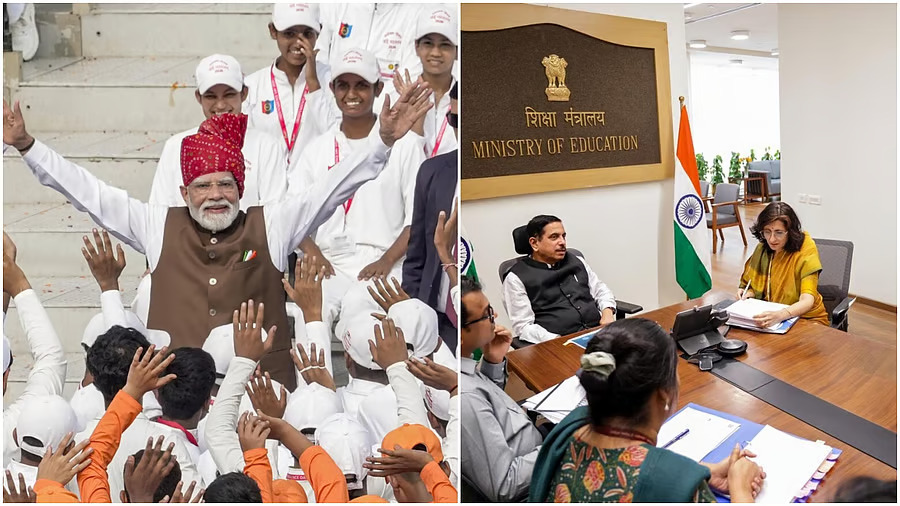
Education Minister Pralhad Joshi has already held discussions with Prime Minister Narendra Modi and senior officials on the coaching initiative. Government officials indicated that the programme could cover preparation for major entrance examinations, including NEET, along with other professional and competitive courses.
Free coaching programme gets implementation push
Following his meeting with the Prime Minister, Joshi met senior officials of the Department of Higher Education to review preparations for the free online coaching platform.
The proposed programme is expected to bring together quality study material, expert guidance and structured preparation resources on a common national platform. The government wants students, particularly those who cannot afford expensive coaching, to have access to preparation resources without the financial burden associated with private coaching centres.
Joshi said the focus was on creating a platform that would make high-quality learning content and expert guidance accessible to students across the country.
The programme was announced by PM Modi during his Independence Day address from the Red Fort. Speaking about the growing dependence on private coaching, he had highlighted the financial pressure faced by families trying to prepare their children for competitive examinations.
‘One Minister, One University’ outreach plan
Alongside the coaching initiative, the government is preparing a separate university outreach programme under which Union ministers will visit universities and engage directly with students and academic communities.
The initiative is being described as a ‘One Minister, One University’ programme. Education Minister Pralhad Joshi and Youth Affairs and Sports Minister Mansukh Mandaviya have been given responsibilities related to coordinating the exercise with universities and participating ministers.
The proposal was also discussed at the Union Cabinet meeting chaired by Prime Minister Modi on Wednesday.
The idea is to create a more direct channel between the Centre and university campuses. Ministers visiting institutions would be able to hear about concerns related to education, employment, examinations, skills and other issues affecting young people.
Focus on students after recent education-related protests
The government’s latest outreach comes against the backdrop of growing concerns over India’s examination and higher education systems.
The cancellation and controversy surrounding major examinations, including NEET-UG and CBSE Class 12 examinations, had triggered anger among students and parents. The issue later became a major point of political debate, with student protests at Delhi’s Jantar Mantar also finding resonance during the Monsoon Session of Parliament.
The Centre’s latest initiatives appear aimed at addressing some of those concerns by improving access to academic resources while creating a direct mechanism for dialogue with students.
For the government, the twin initiatives — free online coaching and direct ministerial engagement with universities — also place youth at the centre of its broader Gen Z outreach strategy.
A push beyond expensive private coaching
The free coaching platform could become particularly significant for students from low- and middle-income families, for whom professional coaching can represent a substantial financial commitment.
By bringing preparation material and expert guidance online, the government is seeking to reduce the dependence on costly coaching institutes. If NEET and other high-value professional entrance examinations are included, the initiative could potentially cover a large section of students preparing for some of India’s most competitive exams.
The success of the programme, however, will depend on the quality of its content, accessibility, expert support and the ability to reach students beyond major urban centres.