 By
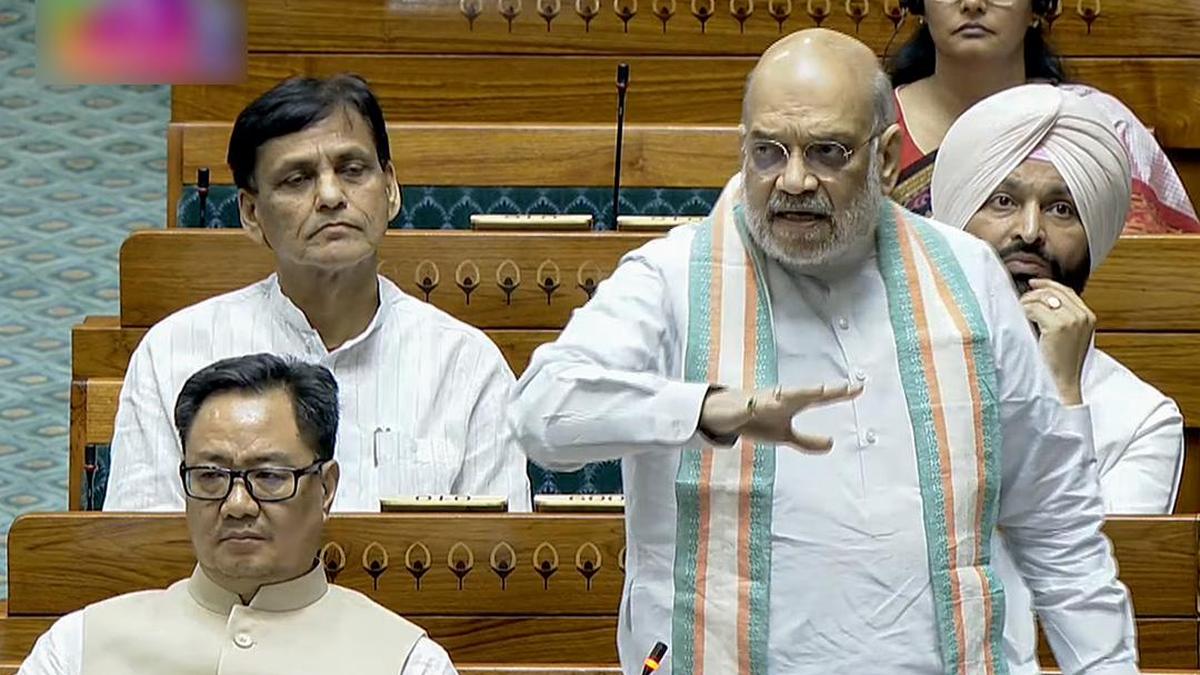
By Union Home Minister Amit Shah on Monday told the Lok Sabha that India is on the verge of achieving a major internal security milestone, with the top leadership of Maoist groups almost completely dismantled over the past two years. Presenting an update on the government’s anti-Naxal operations, Shah said that only one senior Maoist leader remains at large, and talks are underway for his surrender, signalling that the country is close to declaring itself Naxal-free.
Speaking during a discussion on Left Wing Extremism, the Home Minister described the recent developments as the result of a coordinated and technology-driven security strategy. He emphasized that the government’s target of eliminating Maoist influence by March 31, 2026, is nearly achieved and that a formal announcement will follow once the final process is completed. According to him, the dismantling of the Maoist Politburo and central leadership marks a turning point in India’s decades-long fight against insurgency.
Shah revealed that at the start of 2024, the Communist Party of India (Maoist) had 21 key Politburo and Central Committee members. Since then, 12 have been killed, seven have surrendered, and one has been arrested, leaving only a single absconding leader. Over the past three years, security forces have killed more than 700 Maoists, arrested over 2,200, and facilitated the surrender of nearly 4,800 cadres, significantly weakening the insurgent network.
The Home Minister credited the success to a clear policy framework and strong coordination between central and state agencies. He said the approach combined dialogue, security operations, and inter-agency coordination, supported by advanced technology such as drone surveillance, satellite imaging, mobile tracking, and artificial intelligence-based data analysis. This modern surveillance system, he noted, helped security forces conduct precise operations while minimizing civilian harm.
Highlighting the human cost of Maoist violence, Shah said millions of people in affected regions had lived under fear and poverty for decades, with thousands of young lives lost and development stalled in large parts of the country. He reiterated that the government remains open to rehabilitation for those who surrender but warned that violence against civilians and security forces would be met with strict action.
The Home Minister also pointed to improved cooperation from states in recent years, particularly in key Maoist-affected regions, which helped accelerate operations and restore governance in previously disturbed areas. With most states now free from Maoist influence and security forces firmly in control of former strongholds, Shah said India is entering a new phase focused on development, infrastructure, and stability in these regions.
The statement in Parliament reflects the government’s broader push to project internal security gains while strengthening administrative presence and development in areas once considered part of the Red Corridor.