
 By
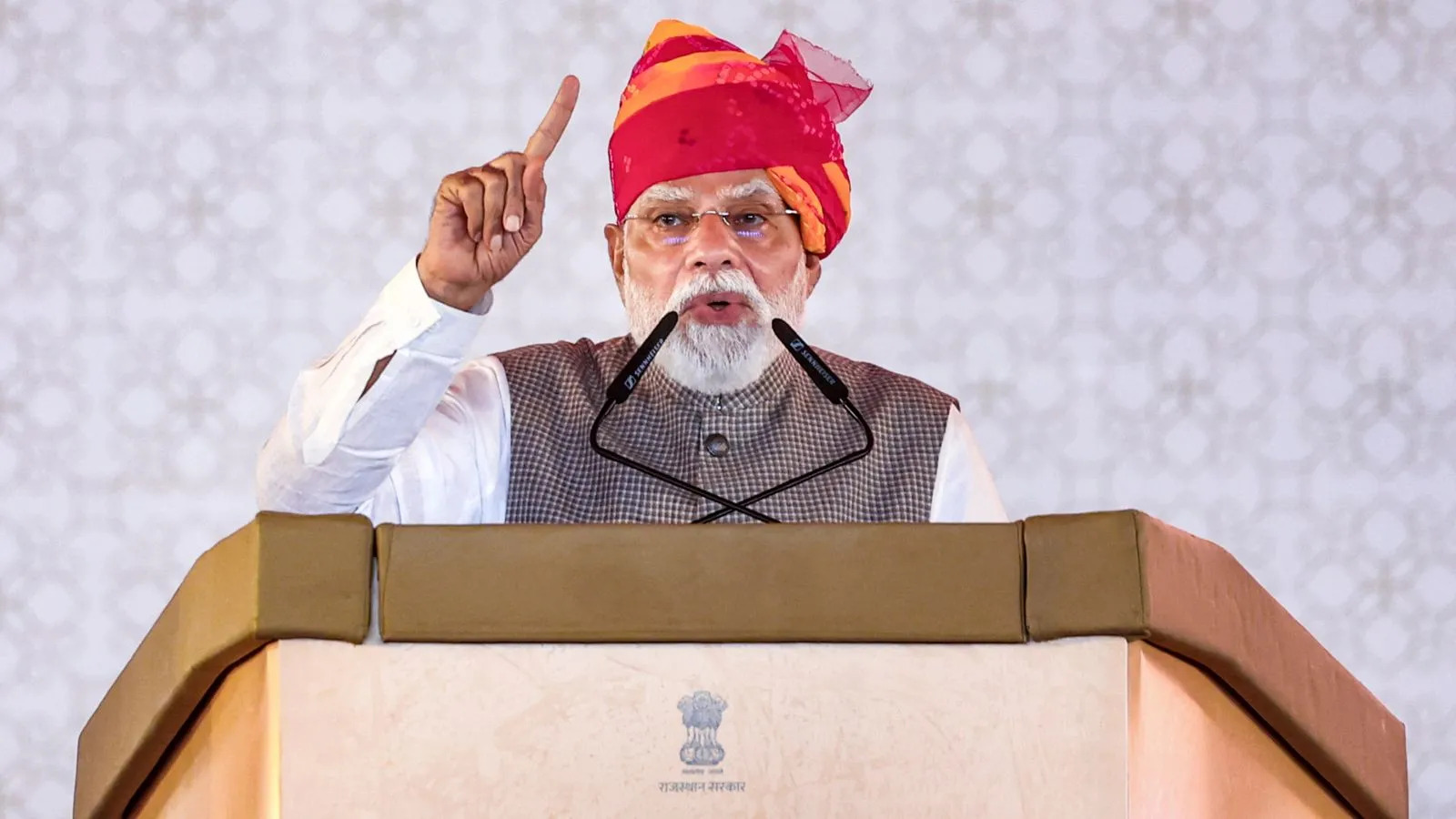
By Prime Minister Narendra Modi on Saturday credited India’s diplomatic outreach and long-term energy strategy for helping the country navigate the fuel crisis triggered by the conflict in West Asia. Addressing a public gathering in Rajasthan’s Balotra, the Prime Minister said India managed to avoid the severe shortages and price shocks witnessed in several countries, describing it as a result of timely policy decisions, strategic planning and strong international partnerships.
Highlighting the government’s response to the global energy disruption, Modi said India’s handling of the crisis would eventually find a place in history. He argued that while many nations struggled with fuel shortages and soaring prices, India maintained stable supplies by expanding its network of energy suppliers and taking swift domestic measures to protect consumers.
The Prime Minister said the war in West Asia created what he described as the biggest energy crisis of the 21st century, affecting fuel supply chains across the world. According to him, India initially depended on around 25 to 26 countries for its energy imports, but during the crisis, the government widened sourcing to more than 40 countries. He said the country’s diplomatic relations played a key role in ensuring uninterrupted access to fuel during a period of global uncertainty.
Modi also pointed to the government’s domestic interventions to keep petroleum products available despite rising international crude prices. He said public sector oil companies absorbed significant financial losses during the crisis, while the Centre reduced excise duty on fuel to shield consumers from a steep increase in prices.
The Prime Minister made the remarks while inaugurating and laying the foundation stone for development projects worth nearly Rs 1.06 lakh crore in Balotra. The projects span sectors such as petrochemicals, roads, railways, renewable energy, urban transport and power transmission. A key highlight was the dedication of India’s first greenfield integrated refinery-cum-petrochemical complex at Pachpadra.
Developed as a joint venture between Hindustan Petroleum Corporation Limited (HPCL) and the Rajasthan government, the refinery has an annual capacity of 9 million metric tonnes and has been built at an investment of over Rs 79,450 crore. Modi said the project would strengthen India’s refining capabilities while supporting long-term energy security.
He also used the occasion to criticise the previous Congress government in Rajasthan, alleging that the refinery project witnessed delays between 2018 and 2023 due to a lack of cooperation. According to him, work accelerated after the BJP returned to power in the state.
Explaining how India managed the LPG supply challenge, Modi noted that nearly 60 per cent of the country’s cooking gas requirement is imported, with a large share traditionally coming through the Strait of Hormuz. As the conflict disrupted supply routes, the government instructed refineries to increase domestic LPG production by shifting capacity from industrial gas output. He said daily LPG production rose from around 35,000 metric tonnes to 54,000 metric tonnes within a week.
The Prime Minister added that the government simultaneously expanded the rollout of Piped Natural Gas (PNG), connecting nearly 11 lakh households in a short period to reduce pressure on LPG demand. He claimed that despite predictions by some market analysts that domestic LPG cylinder prices could touch Rs 2,000, the government kept prices below Rs 950, while beneficiaries under the Pradhan Mantri Ujjwala Yojana continued to receive cylinders at subsidised rates.
Modi also referred to the recent reduction in commercial LPG cylinder prices, saying it reflected the government’s commitment to easing the burden on businesses. He maintained that India successfully navigated the crisis because it combined timely decision-making, balanced resource management and diplomatic engagement, ensuring that the country remained insulated from the worst effects of the global energy disruption.