
 By
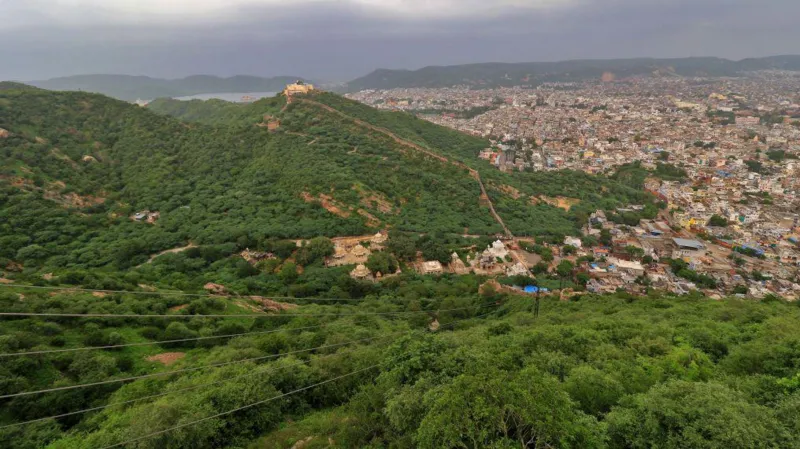
By Protests have spread across northern India following a Supreme Court decision that redefines the Aravalli hills, one of the world’s oldest geological formations stretching across Rajasthan, Haryana, Gujarat, and the national capital, Delhi.
Under the revised definition, accepted by the Supreme Court of India after recommendations from the federal government, an Aravalli hill is defined as any landform rising at least 100 metres (328 feet) above the surrounding terrain. Two or more such hills located within 500 metres of each other — along with the land between them — are classified as an Aravalli range.
Why the New Definition Is Controversial
Environmental groups argue that defining the Aravallis purely by elevation could leave many lower, scrub-covered but ecologically vital hills vulnerable to mining and construction. These smaller formations, experts say, play a critical role in preventing desertification, recharging groundwater, and sustaining livelihoods in northwest India.
The federal government, however, maintains that the revised definition is intended to strengthen regulation, ensure uniform standards across states, and not weaken environmental protections.
Why Are People Protesting?
Over the weekend, peaceful protests were held in cities such as Gurugram and Udaipur, led by residents, farmers, environmental activists, and, in some cases, lawyers and political parties.
Neelam Ahluwalia, a founding member of the People for Aravallis group, said the new definition risks undermining the range’s role in “preventing desertification, recharging groundwater, and protecting livelihoods.”
Environmental activist Vikrant Tongad argued that hill systems worldwide are defined by their ecological and geological functions rather than fixed height thresholds. He warned that excluding lower hills from protection could accelerate environmental degradation. Activists are calling for a scientifically grounded definition based on geography, ecology, wildlife corridors, and climate resilience.
Opposition parties have also intensified criticism. Samajwadi Party chief Akhilesh Yadav said protecting the Aravallis is “inseparable from Delhi’s survival,” while Rajasthan Congress leader Tika Ram Jully described the range as the state’s “lifeline,” warning that its loss would push desertification toward the capital.
What the Government Says
The federal government has sought to counter these concerns, stating that the revised definition is necessary to regulate mining consistently across states. It says the framework explicitly includes hill slopes, clusters, connected landforms, and intervening areas, thereby safeguarding the broader hill system.
The environment ministry has stressed that it is incorrect to assume mining will be permitted on all landforms below 100 metres. According to the government, new mining leases remain prohibited within Aravalli areas, while existing operations may continue only under sustainable mining norms. Core “inviolate” zones — such as protected forests, eco-sensitive areas, and wetlands — remain off-limits, except for limited strategic or atomic minerals permitted by law.
Environment Minister Bhupender Yadav has said that only about 2% of the Aravalli range’s 147,000 square kilometres could potentially be opened to mining, and only after detailed environmental studies and regulatory approvals.
Despite these assurances, protest groups say demonstrations will continue and that legal options are being explored to challenge the court-backed definition.