
 By
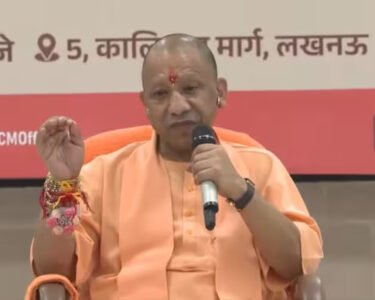
By In Uttar Pradesh politics, even routine meetings often carry deeper meaning. So when Chief Minister Yogi Adityanath begins a series of closed-door coordination meetings with leaders of the Rashtriya Swayamsevak Sangh across multiple cities, it naturally draws attention. Over the past few weeks, Adityanath has held interactions with Sangh functionaries in Ghaziabad, Kanpur, Agra, Lucknow, Gorakhpur, and Varanasi, signalling a renewed effort to tighten organisational coordination well ahead of the 2027 Assembly elections.
The timing of these meetings is significant. The Bharatiya Janata Party suffered a notable setback in the 2024 Lok Sabha elections in Uttar Pradesh, winning only 33 out of 80 seats compared to 62 in 2019. For a state that plays a decisive role in national politics, the result triggered internal reviews and discussions on strengthening grassroots mobilisation and reconnecting the government with the party’s organisational structure.
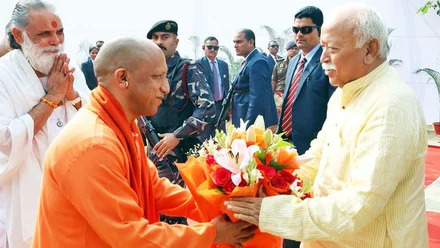
One of the most closely watched developments was the visit of RSS chief Mohan Bhagwat to Lucknow in February. During the visit, Bhagwat held a private meeting with Adityanath, where the chief minister reportedly briefed him on governance priorities, including infrastructure, industrial investment, law and order, and welfare schemes. Bhagwat also met Deputy Chief Ministers Keshav Prasad Maurya and Brajesh Pathak separately, a move that political observers interpreted as part of a broader organisational review and coordination exercise.
Within the BJP’s state unit, the need for stronger booth-level management and better communication between leaders and workers has been repeatedly flagged after the 2024 results. Maurya’s earlier remarks that “the party is bigger than the government” were widely seen as a reminder of the importance of organisational discipline and coordination. The Sangh, with its deep grassroots network, is now playing a key role in helping bridge gaps between the government and the party structure.
Behind the political strategy lies a parallel ideological push. Bhagwat, during his interactions, stressed the importance of social harmony and reducing caste divisions as part of the Sangh’s outreach campaigns. The message aligns with the BJP’s broader attempt to consolidate support across social groups at a time when opposition parties, particularly the Samajwadi Party, are working to strengthen caste-based alliances in the state.
Government insiders say the focus of these meetings has also been on addressing everyday governance concerns, including corruption complaints, farmers’ issues, and local administrative responsiveness. The idea is to create closer coordination between ministers, MLAs, party workers, and Sangh volunteers so that feedback from the ground reaches decision-makers quickly.
With nearly two years left for the 2027 Assembly elections, the BJP still has time to rebuild its organisational strength in Uttar Pradesh. However, the ongoing coordination between Adityanath and the RSS suggests that preparations have already begun in earnest, with the party aiming to correct weaknesses exposed in 2024 and consolidate its position in India’s most politically crucial state.