

 By
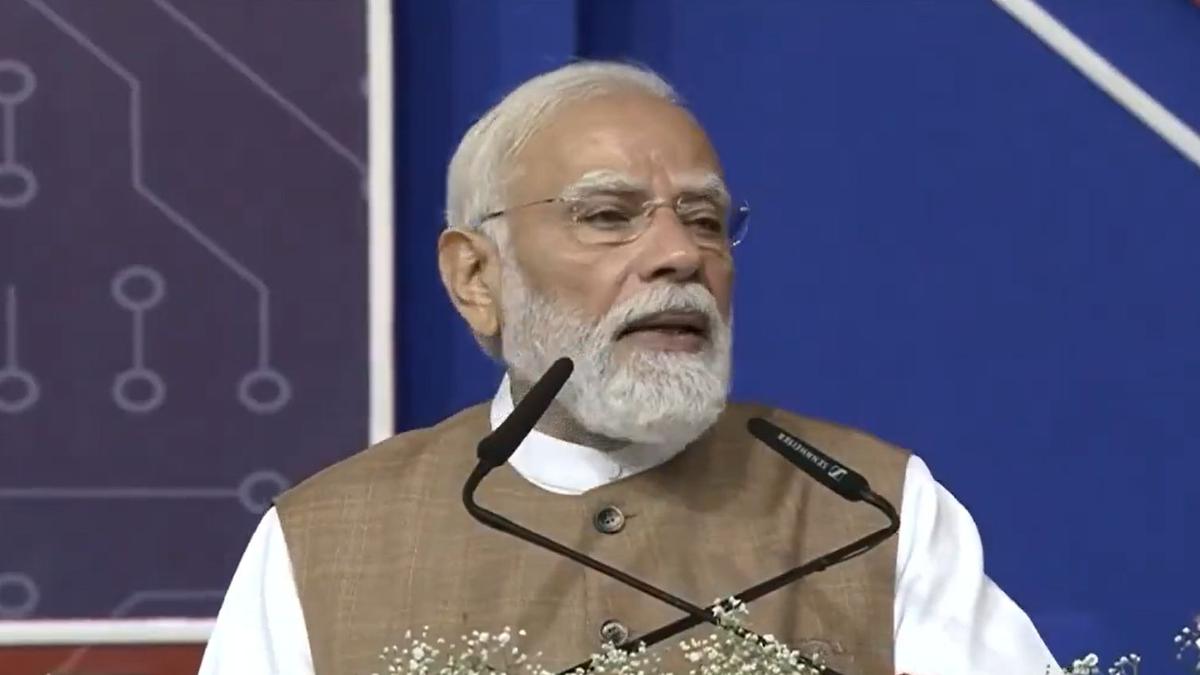
By Gujarat’s industrial town of Sanand took center stage in India’s growing semiconductor ambitions on Tuesday as Prime Minister Narendra Modi inaugurated a major semiconductor assembly and test facility, describing the town as a new “bridge to Silicon Valley.” The ₹3,300-crore plant is being seen as a key step in India’s effort to secure a stronger position in the global chip supply chain and reduce dependence on foreign manufacturing.
Addressing industry leaders, officials, and local stakeholders, the Prime Minister highlighted that India is entering a decisive decade in technology and manufacturing, where semiconductors will play a crucial role in shaping economic and strategic strength. He said the Sanand facility reflects the country’s shift from being just a consumer of electronics to becoming a global supplier of advanced technology components.
The newly inaugurated Kaynes Semicon facility is expected to produce intelligent power modules and semiconductor components that will serve both domestic and international markets, including companies in the United States. According to the Prime Minister, India’s semiconductor market is projected to cross $100 billion by the end of the decade, making investments like Sanand essential for future growth.
Government officials noted that the India Semiconductor Mission, launched in 2021, has already attracted investments worth over ₹1.6 lakh crore across multiple states. The initiative focuses on building a complete ecosystem—from raw materials and chip design to manufacturing and testing—so that India can become a reliable partner in global supply chains. The COVID-19 pandemic and ongoing geopolitical tensions exposed the vulnerability of global chip supply, prompting India to accelerate domestic manufacturing capacity.
Modi also pointed to international collaborations, including participation in global initiatives aimed at securing semiconductor and rare earth supply chains. He said India is working on critical minerals, recycling schemes, and coastal rare earth corridors to ensure long-term technology and energy security. Alongside manufacturing, the government plans to train more than 85,000 semiconductor design professionals and support startups through chip design and innovation programs.
During his visit to Gujarat, the Prime Minister also inaugurated the Samrat Samprati Museum in Gandhinagar on the occasion of Mahavir Jayanti, highlighting India’s cultural heritage alongside technological progress. In addition, he launched and laid the foundation for development projects worth nearly ₹19,800 crore and visited the newly operational airbase in Deesa, underlining its strategic importance near the international border.
The visit signaled a dual message—India’s push for technological leadership through semiconductor manufacturing and its continued focus on infrastructure, security, and cultural heritage. With Sanand now entering the global chip ecosystem, Gujarat is steadily positioning itself as one of the key hubs in India’s semiconductor journey.