
 By
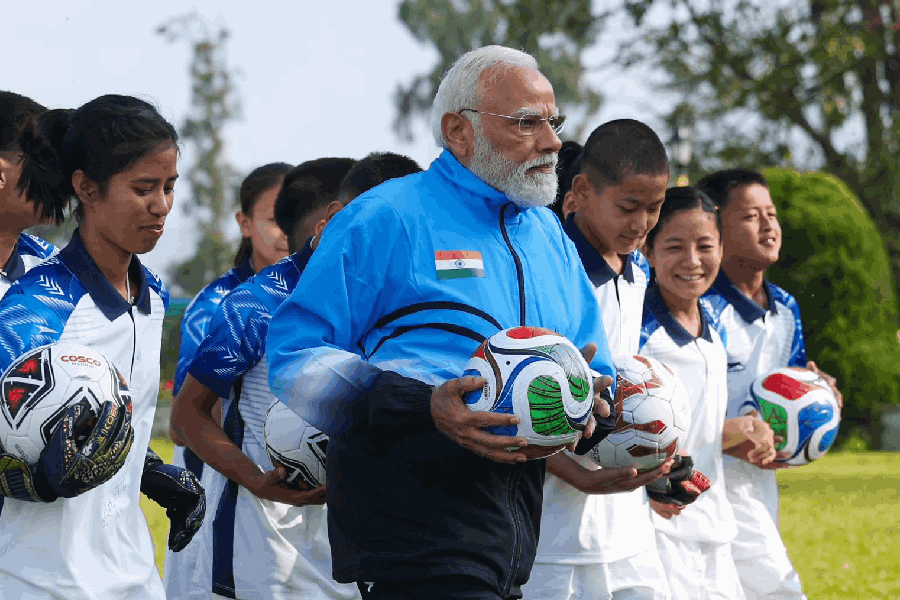
By Prime Minister Narendra Modi added a personal touch to his visit to Sikkim by stepping onto a football field with local youngsters, turning a routine engagement into a moment of connection and energy. Sharing glimpses of the interaction, Modi described the session as “energising,” capturing both the spirit of the game and the enthusiasm of the young players who joined him.
The images, posted on social media, showed the Prime Minister actively participating in the game and later posing with the group against the scenic backdrop of Gangtok. While brief, the interaction reflected a broader message—one that aligns with the government’s push to promote sports culture at the grassroots level, especially in regions where football enjoys deep popularity.
Beyond the field, Modi used the occasion to underline the Centre’s focus on strengthening sports infrastructure in Sikkim. He pointed to efforts aimed at nurturing talent in disciplines like football and archery, suggesting that the Northeast holds significant untapped potential in these areas. His remarks also tied into the government’s larger vision for the region, often described as India’s “Ashtalakshmi,” symbolising growth and opportunity across multiple sectors.
The visit coincided with the golden jubilee celebrations of Sikkim’s statehood, where Modi outlined a roadmap for development that extends beyond sports. Addressing a gathering, he emphasised the importance of connectivity in unlocking the state’s tourism potential—an industry that remains central to Sikkim’s economy.
Among the key announcements were infrastructure projects designed to improve access and boost visitor inflow, including plans for enhanced road networks linking Sikkim with neighbouring regions. He also highlighted proposals for ropeways and other tourism-oriented initiatives aimed at making travel within the state more convenient and appealing.
Modi placed particular emphasis on eco and wellness tourism, noting that Sikkim’s natural landscape offers unique opportunities in these segments. Initiatives such as the development of homestays and expansion of adventure tourism infrastructure are expected to create local employment while preserving the state’s ecological balance.
Describing Sikkim as a “heaven of the East,” the Prime Minister encouraged travellers to explore its biodiversity, especially its renowned orchids and pristine environment. The visit concluded with the launch of development projects worth over ₹4,000 crore, reinforcing the Centre’s commitment to the region’s growth.
From a friendly football match to major policy announcements, Modi’s Sikkim visit combined symbolism with substance—showcasing both engagement with youth and a broader development vision.