
 By
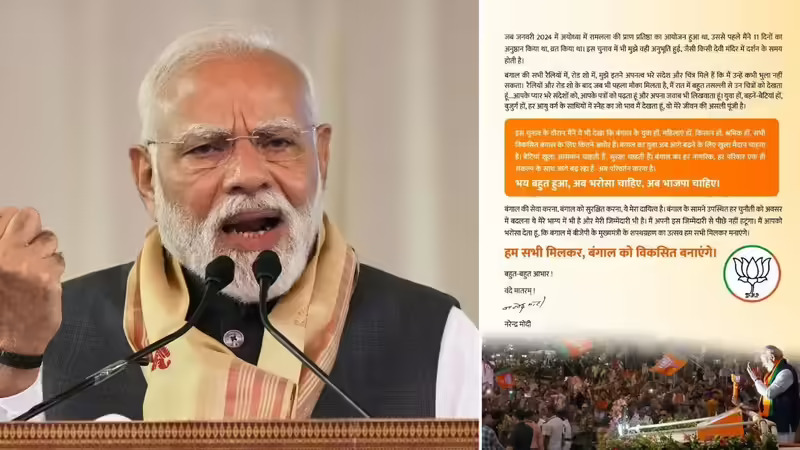
By As campaigning for the West Bengal Assembly elections drew to a close, Prime Minister Narendra Modi made a final appeal to voters through a detailed open letter, blending political messaging with personal reflection. The outreach, timed just hours before the campaign silence began, positioned the election as more than a contest for power—framing it instead as a moment of transformation for the state.
In his message, Modi spoke directly to the people of Bengal, highlighting what he described as a strong undercurrent of aspiration across different sections of society. From youth seeking opportunities to women demanding safety and dignity, he portrayed a state ready to move toward what he called “Viksito Bangla”—a developed and forward-looking Bengal.
The Prime Minister’s tone was notably personal. Reflecting on his campaign journey, he described the rallies and roadshows not merely as political events but as emotionally charged experiences. According to him, the energy and participation of the people turned these engagements into something akin to a “public movement,” reinforcing his belief that the desire for change is widespread.
He also invoked cultural and spiritual connections, referencing Bengal’s deep-rooted traditions and his own experiences visiting places of faith during the campaign. These elements, he suggested, strengthened his bond with the state and shaped his vision for its future—one that blends development with cultural pride.
At the heart of Modi’s message was a critique of the current political climate. Without naming individuals directly in the letter, he hinted that fear and lack of opportunity have held Bengal back, arguing that a shift in governance could unlock the state’s true potential. The Bharatiya Janata Party, he said, is committed to ensuring both development and security, presenting itself as a credible alternative.
The timing of the letter is significant. With the first phase of polling witnessing a high voter turnout of over 91%, the BJP has been projecting the participation as a sign of public enthusiasm for change. The second and final phase, scheduled for April 29, is expected to be decisive in shaping the outcome.
Modi concluded his message with a confident note, expressing hope that the election would pave the way for a new political chapter in the state. He called for unity in development and assured voters that their aspirations would remain central to his party’s agenda.
As Bengal heads into the final phase of voting, the Prime Minister’s closing pitch encapsulates the BJP’s campaign strategy—combining emotional connect, development promises, and a call for political transition.