
 By
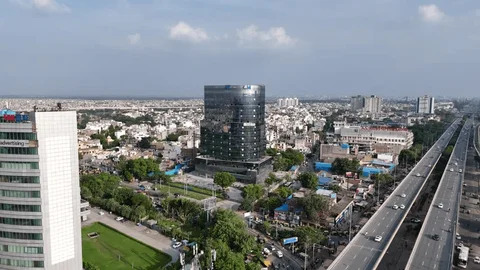
By For years, Gurgaon has been the undisputed symbol of urban growth in the National Capital Region (NCR), attracting multinational companies, high-end residential projects and massive infrastructure investments. But as land prices soar and development reaches maturity in many parts of Gurgaon, attention is gradually shifting toward a city that has long remained in its shadow — Faridabad.
The conversation today is no longer about whether Faridabad can compete with Gurgaon. Instead, developers, investors and homebuyers are increasingly asking whether the city could become NCR’s next major growth destination, driven by better connectivity, affordable housing and planned urban expansion.
One of Faridabad’s biggest strengths lies in its improving infrastructure network. The extension of the Delhi Metro to Ballabhgarh, enhanced road connectivity through the Delhi-Mumbai Expressway corridor and the prospect of future regional transit projects have significantly improved accessibility. Areas that were once viewed as distant are now far better connected to South Delhi, Noida and other parts of NCR.
This transformation is particularly visible in Greater Faridabad, also known as Neharpar. Unlike older urban pockets that struggle with congestion and infrastructure upgrades, the region has been developed with wider roads, organized sectors and room for future expansion. Educational institutions, healthcare facilities, retail centres and everyday civic amenities are steadily expanding, making the area more attractive for end users rather than just speculative investors.
Affordability remains another major advantage. Property prices in Faridabad continue to be considerably lower than many comparable locations in Gurgaon. For middle-income buyers as well as long-term investors, this creates an opportunity to enter the market at a relatively early stage of the growth cycle.
Beyond housing, a new trend is beginning to shape the city’s development narrative—hospitality-led communities. Projects that combine residential living with serviced apartments, wellness facilities, managed services and lifestyle amenities are gaining attention. These developments cater not only to homeowners but also to professionals, business travellers and long-stay visitors seeking flexible accommodation options.
Industry observers believe such integrated projects can help create more vibrant local economies. A steady flow of residents and visitors supports restaurants, retail outlets, healthcare services and entertainment venues, generating demand beyond traditional residential markets.
Unlike Gurgaon, whose growth was largely fuelled by corporate expansion, Faridabad’s development appears to be following a more balanced path that combines infrastructure, housing, services and lifestyle-oriented planning. This diversification could make the city more resilient to market fluctuations and create a broader base for sustained growth.
While Gurgaon remains NCR’s dominant commercial hub, Faridabad is steadily positioning itself as an alternative growth corridor. If current infrastructure projects continue at pace and planned developments are executed effectively, the city may finally unlock the potential that many believe has existed for years.