
 By
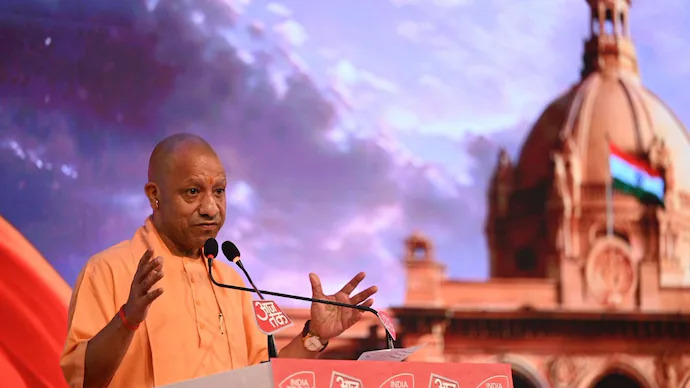
By Uttar Pradesh recorded 156 crore devotees and tourists in 2025, Chief Minister Yogi Adityanath said on Thursday, highlighting religious tourism as an increasingly important contributor to the state’s economy. He said the large visitor turnout showed how Uttar Pradesh could use its cultural and spiritual heritage to generate economic activity and new opportunities.
Speaking at the Panchayat Aaj Tak event in Mathura, Adityanath said the Braj region alone attracted around 11 crore devotees and tourists last year. He argued that the combination of faith, better infrastructure and tourism was creating a new model of development for the state.
Yogi links faith with economic growth
Adityanath said the growing number of visitors to Uttar Pradesh reflected a change in the way the state’s religious and cultural assets were being viewed.
According to him, the scale of religious gatherings is creating opportunities not only for tourism but also for local businesses, employment and infrastructure development.
He said challenges should be approached as opportunities and then converted into practical solutions that can contribute to long-term growth.
Braj’s festivals driving tourism
The chief minister pointed to Braj’s calendar of religious celebrations as an example of the region’s tourism potential.
Mathura and Vrindavan attract large crowds during Krishna Janmashtami, while Barsana’s Holi, Brajraj Mahotsav, Panchkosi Parikrama, Govardhan Parikrama and Chaurasi Kosi Parikrama also draw devotees from different parts of the country.
Adityanath said the scale of these events demonstrated that religious traditions could also support a wider tourism economy when supported by adequate infrastructure and public facilities.
‘UP has everything to become number one’
The chief minister said Uttar Pradesh had several advantages that could help it become one of India’s leading economies. These include its large young population, agricultural resources, historical and cultural heritage, religious destinations, geographical size and a substantial consumer market.
He said the state’s population should be seen as a demographic dividend rather than a burden, provided young people are connected with education, skills, employment and entrepreneurship.
“We have the strength of our youth. We have to connect the scale of our young population with scaling up, connect their skilling with employment and link it with the startup ecosystem,” he said.
Investment policies and tourism infrastructure
Adityanath also highlighted the government’s efforts to attract investment by introducing 36 sector-specific policies.
He referred to the development of hospitality infrastructure in the Braj region, including a five-star hotel by the Taj Group. He said several proposals that had remained pending were cleared after the state government intervened, allowing the project to become operational for visitors.
Infrastructure supporting religious tourism
The chief minister said investment in roads and other infrastructure around pilgrimage centres was essential to unlocking their economic potential.
He contrasted the current tourism environment with the situation before 2017, recalling the June 2016 Jawahar Bagh violence in Mathura, in which 29 people were killed, including police personnel.
Adityanath said the change in the region’s security and infrastructure environment had helped create conditions in which large numbers of devotees and tourists could visit religious destinations.
He argued that better connectivity, public amenities and security were allowing religious tourism to contribute more significantly to the local and state economy.