
 By
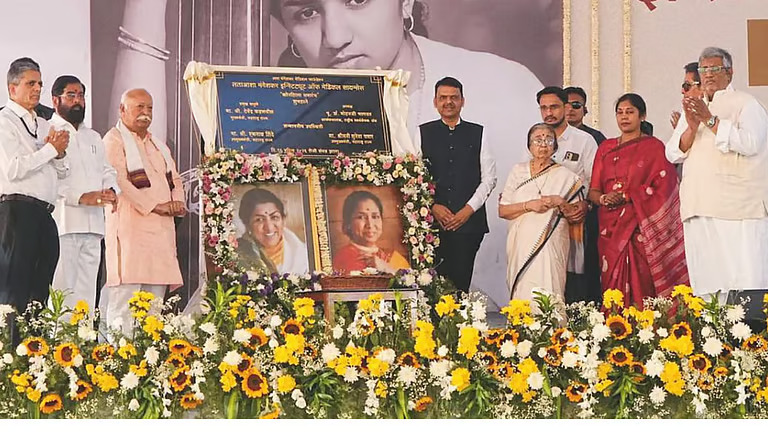
By At a ceremony blending healthcare, culture, and public service, Mohan Bhagwat underlined the importance of selfless service as the true meaning of ‘dharma’. Speaking at the foundation-laying event of the Lata-Asha Mangeshkar Institute of Medical Sciences in Pune’s Nandoshi area, he framed service without expectation as the foundation of a humane and cohesive society.
The upcoming medical institute, spread over 40 acres and planned as a 1,000-bed facility, is being positioned as a major addition to affordable healthcare infrastructure in the region. The project also carries emotional weight, being named after legendary singers Lata Mangeshkar and Asha Bhosle, whose cultural legacy continues to resonate across generations.
Bhagwat said that acts of quiet, selfless service keep the spirit of goodness alive in society. According to him, true ‘dharma’ is not about ritual or identity but about fostering a sense of brotherhood and working for the well-being of others. He also described the hospital initiative as a meaningful tribute to the Mangeshkar sisters, noting that their contribution to music carried deep emotional power that connected people across boundaries.
The event saw the presence of key political leaders, including Maharashtra Chief Minister Devendra Fadnavis and Deputy Chief Minister Eknath Shinde, along with members of the Mangeshkar family and medical professionals associated with the project.
Fadnavis praised the family’s longstanding commitment to healthcare through institutions like Deenanath Mangeshkar Hospital, highlighting that their approach has always been rooted in responsibility rather than profit. He said the new institute would help address the growing need for accessible and reasonably priced medical services. The Chief Minister also assured state support for improving road connectivity and basic infrastructure around the upcoming facility.
Eknath Shinde, meanwhile, reflected on the enduring influence of the Mangeshkar family on India’s cultural life. He suggested that the new hospital could explore integrating music therapy into patient care, pointing to the healing potential of music—a nod to the legacy of Lata Mangeshkar and Asha Bhosle.
The ceremony also included personal recollections from the family, with Anand Bhosle sharing memories, and a musical tribute adding an emotional layer to the event. A message from Hridaynath Mangeshkar, read out due to his ill health, highlighted the family’s deep connection to both music and service.
While the focus remained on healthcare and service, the event also reflected how cultural legacy and social responsibility can intersect—offering a vision where institutions are not just built for treatment, but also for compassion and community.