 By
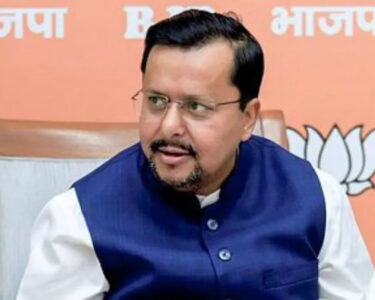
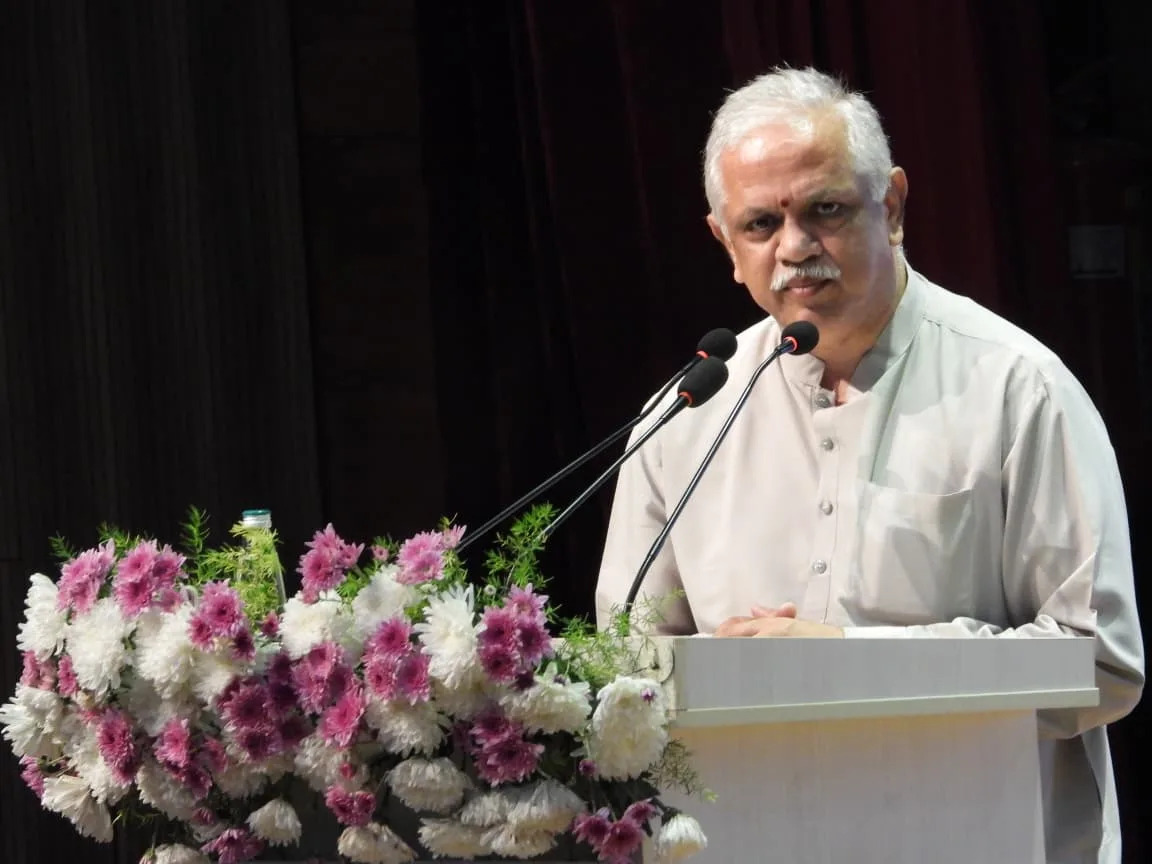
By A three-day international seminar on “Integral Humanism: India’s Worldview” concluded in Mysuru with a strong emphasis on reshaping society through values, cultural grounding, and intellectual independence. Speaking at the closing session, BJP National General Secretary (Organisation) B. L. Santhosh underlined the need for a deeper societal transformation, arguing that rules alone cannot sustain a nation unless they are backed by shared values.
Santhosh said India must gradually move from a system driven primarily by regulations to one anchored in ethical and cultural values. Referring to Rama as a timeless example, he noted that individual greatness and social harmony emerge from a value-based life rather than rigid enforcement of rules. According to him, such a transition is essential for building a resilient and cohesive society.
The seminar, held at Karnataka State Open University and organised by Prajna Pravah along with the Dr. Syama Prasad Mookerjee Research Foundation, brought together academics, policymakers, and thinkers to discuss how Indian philosophical ideas can inform contemporary governance and policy-making. Santhosh pointed out that translating these ideas into practice is not straightforward, as challenges exist at multiple levels—from individual mindsets to institutional frameworks.
He identified the continued influence of Western thought and lifestyle as a key obstacle, questioning whether true decolonisation is possible if society continues to think within inherited frameworks. He also stressed the importance of politically aware and ideologically informed citizens, arguing that weak or disengaged voters often lead to weak governance systems. In this context, he called for a greater role for communities in governance, with reduced over-dependence on the state.
Other speakers echoed similar themes. K. V. Raju emphasised the need to move beyond theoretical discussions and develop clear, actionable plans for implementing the principles of Integral Humanism across sectors. He suggested that such dialogues should lead to measurable outcomes and policy roadmaps.
Meanwhile, Shantisree Dhulipudi Pandit highlighted the role of education in shaping global narratives, arguing that India must strengthen its academic frameworks to present its civilisational perspective more effectively on the world stage. She noted that in an increasingly polarised global environment, intellectual clarity and confidence are crucial.
In the valedictory session, speakers reiterated that Integral Humanism reflects India’s traditional way of life rather than a newly constructed ideology. Discussions also touched upon the importance of preserving social institutions such as the family and understanding concepts like “Dharma” in their broader philosophical context.
The seminar concluded with a collective call for a development model that goes beyond economic growth to include cultural strength, social cohesion, and ethical progress—an approach participants said is essential for India’s long-term future.