
 By
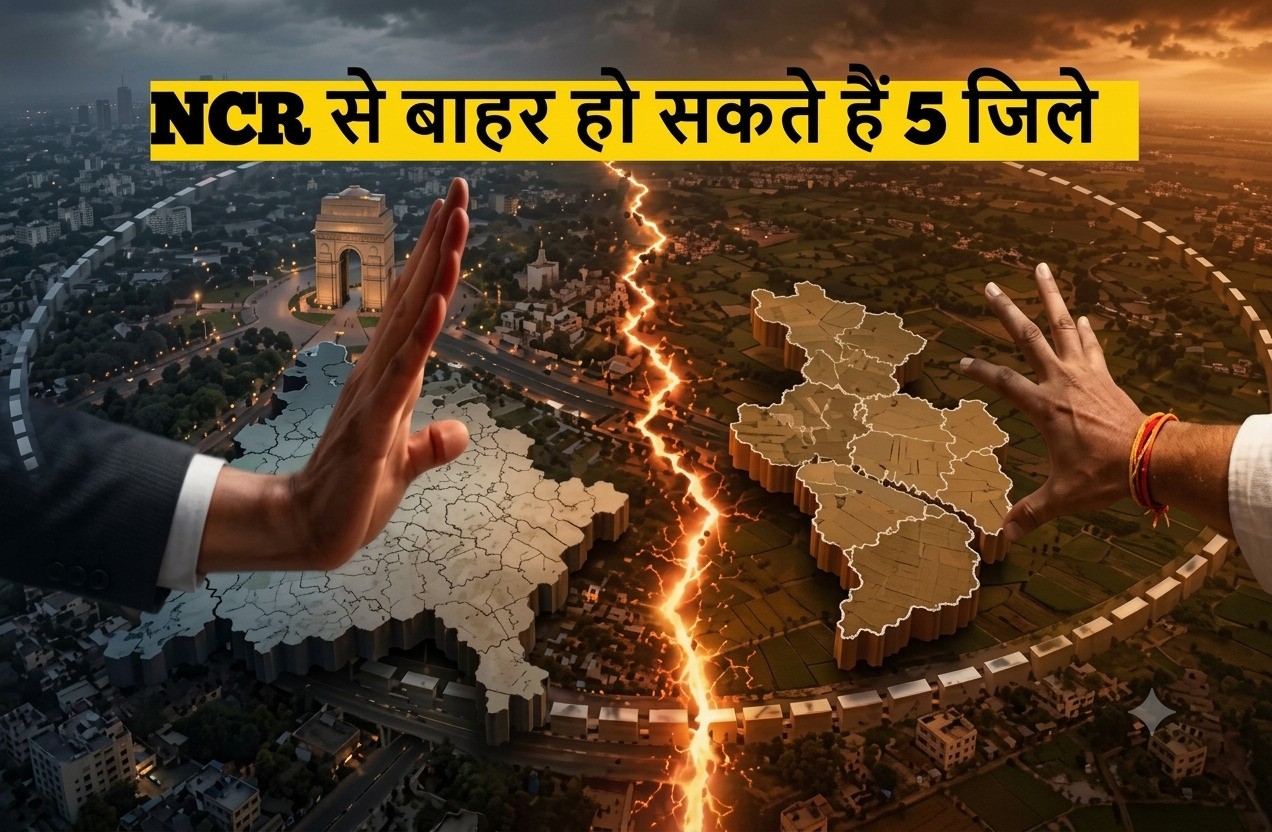
By A crucial meeting scheduled between officials in New Delhi and Chandigarh on June 16 could shape the future of Haryana’s growth strategy for decades to come. While the discussion is officially focused on redefining the boundaries of the National Capital Region (NCR), its implications go far beyond administrative maps. The outcome could influence investment patterns, industrial expansion, land values, urban planning, and employment opportunities across several districts of the state.
For years, being part of the NCR was viewed as a development advantage. The NCR tag often attracted real estate investment, boosted infrastructure spending, and increased the visibility of districts among businesses and investors. However, Haryana is now questioning whether regions located 150 to 200 kilometres away from Delhi should continue to be governed by the same regulations and restrictions designed for areas closer to the national capital.
State officials argue that several districts currently included in the NCR face environmental and administrative limitations that do not necessarily reflect local realities. These restrictions can affect industrial projects, construction activities, and other development initiatives, potentially slowing economic growth in areas that have different needs and priorities.
The debate has gained momentum under the proposed Regional Plan-2041, which suggests limiting the NCR boundary to a 100-kilometre radius from Delhi’s Rajghat. If approved, Haryana’s NCR footprint could shrink significantly, bringing a major shift in how the region is defined and managed.
Districts such as Mahendragarh, Bhiwani, Charkhi Dadri, Jind, and Karnal are expected to be among the most affected. For years, these regions have built development expectations around their NCR status. Naturally, concerns remain over whether a change in classification could impact future investments or influence property values.
Yet policymakers believe there may be another side to the story. Moving outside the NCR framework could provide these districts with greater flexibility to design development models suited to their own economic and geographical conditions. Reduced regulatory constraints may create fresh opportunities in manufacturing, warehousing, logistics, and agro-processing industries.
What makes Haryana’s position particularly noteworthy is that it differs from the approach taken by neighbouring states. While some states have supported retaining a wider NCR footprint, Haryana has advocated a more focused model in which only areas with direct economic and functional links to Delhi remain within the NCR. This signals a broader shift towards region-specific development rather than dependence on NCR branding alone.
To balance potential concerns, the state has proposed retaining one-kilometre-wide development corridors along major national highways within the NCR framework. Such a move could help preserve industrial connectivity and support logistics networks, especially in key growth belts like Panipat and Karnal.
The June 16 meeting is therefore about much more than drawing new boundaries. It could determine whether Haryana continues to grow primarily as part of Delhi’s extended economic zone or emerges with a more independent and locally driven development model. The decision is expected to play a significant role in shaping the state’s economic and urban future in the years ahead.