
 By
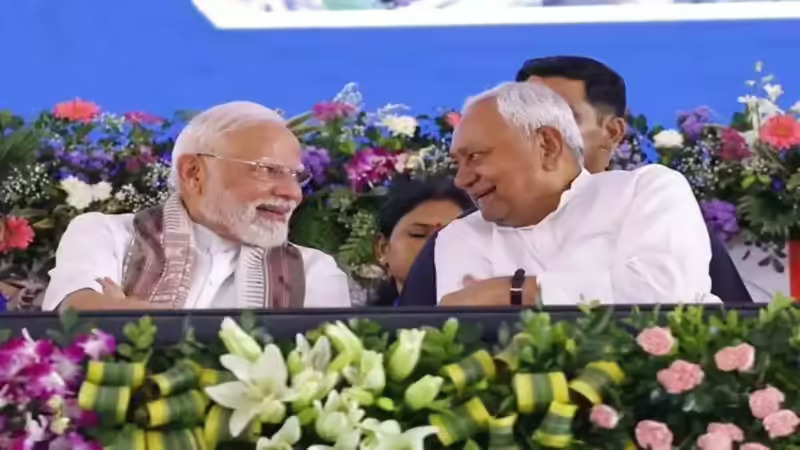
By Prime Minister Narendra Modi on Friday congratulated Nitish Kumar after the veteran Janata Dal (United) leader took oath as a Rajya Sabha member, marking his return to Parliament after more than two decades. The Prime Minister said it would be a pleasure to see Kumar back in the Upper House, describing him as one of the country’s most experienced political leaders whose administrative and parliamentary experience would add value to national discussions.
In a message posted on social media, Modi praised Kumar’s long-standing commitment to governance and development, particularly highlighting his role in shaping Bihar’s growth over the years. He expressed confidence that Kumar’s presence in Parliament would enhance the dignity of the House and strengthen policy debates, given his decades of experience both as a chief minister and as a former Union minister and parliamentarian.
The development signals an important shift in Bihar’s political landscape. Nitish Kumar’s move to the Rajya Sabha comes after the NDA’s strong performance in the state assembly elections last year and is being seen as part of a broader political transition within the ruling alliance. With Kumar stepping into a parliamentary role, the path appears clearer for the BJP to push for a stronger leadership role in Bihar, including the possibility of having its own chief minister in the future.
Modi also congratulated Harivansh Narayan Singh after he was nominated for a third term in the Rajya Sabha by President Droupadi Murmu. The Prime Minister praised Harivansh for his contributions to journalism and public life, noting that his intellectual depth and balanced approach have enriched parliamentary proceedings over the years. He said the nomination reflects recognition of Harivansh’s role in maintaining the decorum and quality of debates in the Upper House.
Nitish Kumar’s political journey has been one of the longest and most influential in contemporary Indian politics. Having served multiple terms as Bihar’s chief minister since 2005, with only brief interruptions, he has been a central figure in shaping governance and development policies in the state. His tenure has often been marked by shifting political alliances, but his administrative experience and coalition management skills have kept him relevant in national politics.
Political observers believe Kumar’s entry into the Rajya Sabha could strengthen the NDA’s parliamentary strategy, especially on federal and regional issues where his experience carries weight. At the same time, it reflects a generational shift in Bihar politics, with new leadership likely to take a more prominent role at the state level.
With Kumar now back in Parliament, the NDA appears to be balancing governance in Bihar with a broader national strategy, while ensuring that experienced leaders continue to play a role in shaping legislative and policy priorities.