
 By
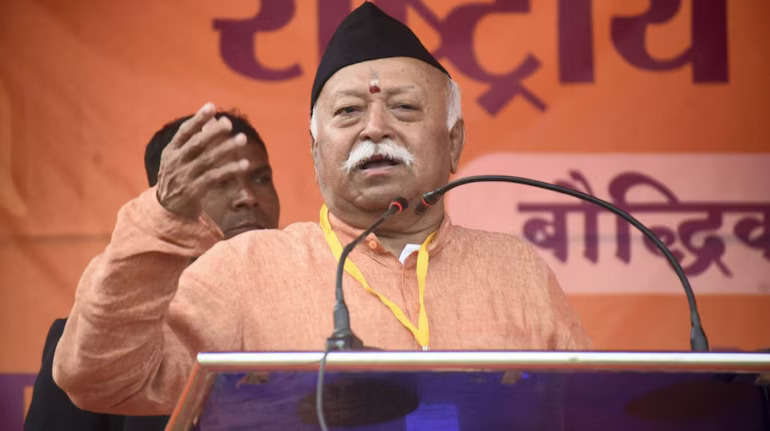
By Mohan Bhagwat has renewed the call for promoting Sanskrit more actively across India, arguing that the language holds the key to strengthening cultural continuity and bridging gaps between diverse linguistic traditions. Speaking at an event in Delhi, he suggested that Sanskrit is not just a classical language but a living link to India’s intellectual and civilisational heritage.
The occasion marked the inauguration of a new central office of Sanskrit Bharati, where Bhagwat highlighted the role Sanskrit could play in uniting India’s many languages. According to him, wider use of Sanskrit would not diminish regional languages but instead enrich them by strengthening their shared roots.
He framed the argument beyond language alone, tying it to a broader understanding of “Bharat” as a civilisational idea rather than just a political or geographical entity. Bhagwat said that India represents a long-standing tradition of thought and knowledge, one that continues to evolve and remains relevant even in today’s global context.
To sustain this legacy, he emphasised the need for deeper engagement with traditional knowledge systems. Sanskrit, he argued, acts as a gateway to accessing ancient texts, philosophies, and ideas that have shaped Indian society over centuries. Without understanding this linguistic foundation, he suggested, it becomes difficult to fully grasp the country’s intellectual heritage.
Bhagwat also underlined the importance of passing this knowledge to future generations. Promoting Sanskrit, in his view, is not about nostalgia but about equipping people with tools to better understand their cultural identity and contribute meaningfully to society.
The remarks come at a time when debates around language, education, and cultural identity continue to shape public discourse. Supporters of Sanskrit promotion often argue that it strengthens national integration, while critics raise concerns about prioritising one linguistic tradition over others.
However, Bhagwat maintained that Sanskrit’s role should be seen as complementary rather than competitive. By acting as a common thread among India’s languages, he said, it can help foster a deeper sense of unity while preserving diversity.