
 By
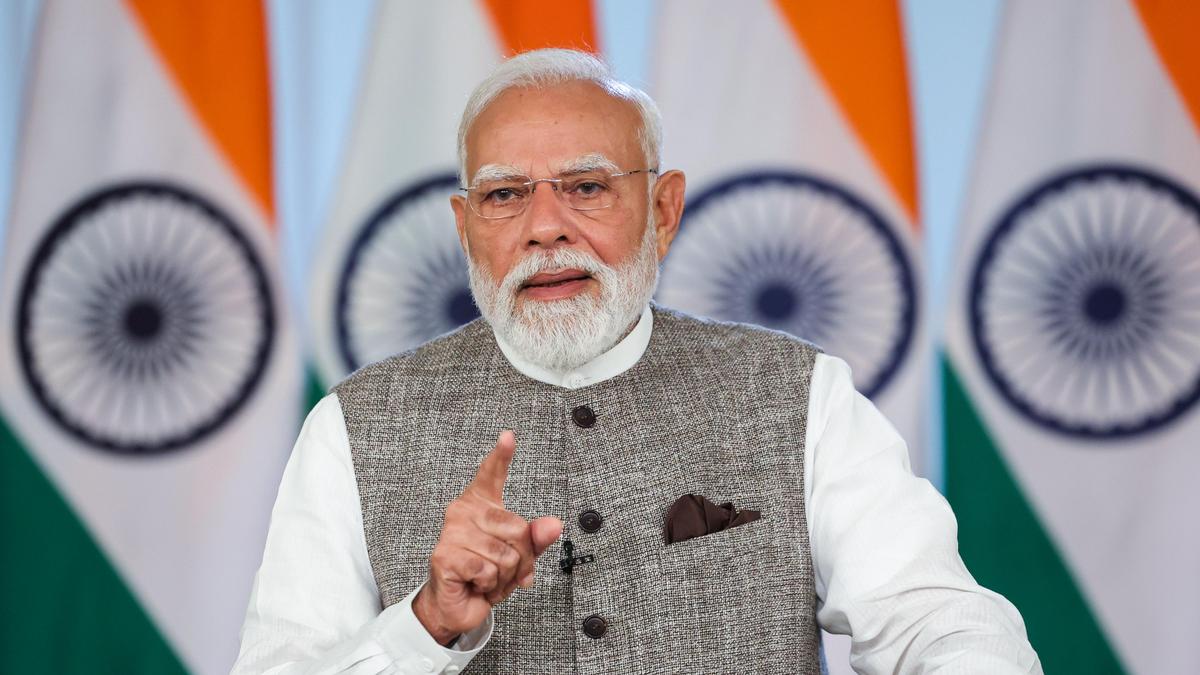
By A day after a key constitutional amendment aimed at introducing women’s reservation failed to pass in the Lok Sabha, Prime Minister Narendra Modi struck a determined note, promising that the government would continue its efforts to remove all hurdles in the way of the proposal.
The setback came as the government could not secure the required two-thirds majority to pass the Constitution (131st Amendment) Bill, which sought to provide 33% reservation for women in Parliament and state assemblies. Addressing the House, Modi acknowledged the disappointment and issued a direct message to women across the country, saying the government remains committed to ensuring their political representation.
“I seek forgiveness from the women of the country,” he said, adding that while the bill did not pass, the intent behind it remains firm. According to him, the proposal had widespread support among women, even if it fell short in Parliament numbers.
The Prime Minister used his address to launch a sharp attack on opposition parties, including the Indian National Congress, Dravida Munnetra Kazhagam, All India Trinamool Congress, and Samajwadi Party. He accused them of celebrating the bill’s failure, describing it as an affront to the dignity and aspirations of women.
Modi argued that the proposed reforms, which also included delimitation and an increase in Lok Sabha seats, were necessary to reflect changing demographics and ensure broader representation. He reiterated that concerns raised by southern states about losing political weight would be addressed, with proportional representation maintained even after seat expansion.
The debate around delimitation has added a layer of complexity to the women’s reservation proposal. Several states have expressed apprehension that redrawing constituencies could alter the balance of power, making the reform politically contentious beyond the issue of gender representation.
Taking aim at what he described as “dynastic politics,” Modi suggested that some parties were wary of empowering women because it could disrupt established political structures. He pointed to the growing participation of women in local governance as evidence that a larger shift in political power is already underway.
The Prime Minister also broadened his critique, accusing the Congress of historically resisting major reforms—from GST and digital payments to social and legal changes such as the abolition of triple talaq and the Citizenship Amendment Act.
Despite the legislative setback, Modi framed the issue as far from over. He signalled that the government would revisit the proposal and attempt to build the required consensus. For now, the failure of the bill highlights the challenges of pushing through constitutional reforms in a divided Parliament, even on issues that enjoy significant public backing.