
 By
By Suvendu Adhikari has completed one of the most dramatic political journeys in recent Bengal history. Once considered one of Mamata Banerjee’s closest political lieutenants, Adhikari is now set to become the first Chief Minister of West Bengal from the Bharatiya Janata Party after leading the party to a historic victory in the 2026 Assembly elections.
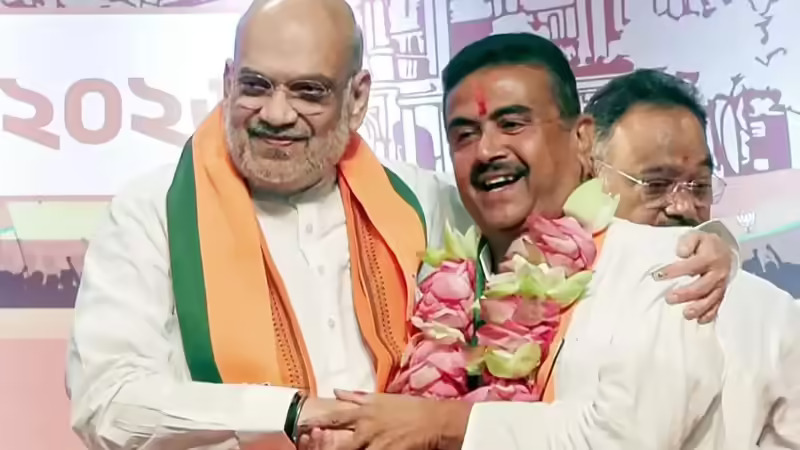
The BJP legislature party on Tuesday unanimously elected Adhikari as its leader, effectively confirming him as the party’s chief ministerial choice. The announcement was made in the presence of Union Home Minister Amit Shah, who attended the meeting as the party’s central observer.
For Bengal politics, the moment carries symbolic as well as political significance. The man who once helped Mamata Banerjee build the Trinamool Congress in rural Bengal has now become the face of the BJP’s rise in the state and the leader who finally ended the TMC’s 15-year rule.
Adhikari comes from the influential Adhikari family of East Midnapore. His father, Sisir Adhikari, has been a veteran figure in Bengal politics, while the family has maintained a strong organisational presence across coastal districts for decades. Suvendu began his political career with the Congress before joining the Trinamool Congress shortly after its formation in 1998.
Over the years, he emerged as one of Mamata Banerjee’s most dependable strategists. He played a crucial role during the Singur and Nandigram movements that eventually propelled the TMC to power in 2011. His grip over grassroots politics and cadre mobilisation made him one of the most powerful leaders in the party after Mamata herself.
However, political differences within the TMC gradually widened. Adhikari’s growing discomfort with the party’s internal power structure eventually led to his switch to the BJP in 2020 — a move that significantly altered Bengal’s political landscape.
His rivalry with Mamata Banerjee quickly became the defining battle of Bengal politics. In 2021, he defeated her in Nandigram in a closely fought contest. Five years later, the rivalry intensified when he challenged her in Bhabanipur, considered Mamata’s political fortress.
The result turned historic. Adhikari defeated Mamata Banerjee by more than 15,000 votes, a symbolic victory that mirrored the BJP’s sweeping performance across the state. Supporters celebrated the moment as a sign of Bengal’s political transformation and the BJP’s expanding grassroots strength.
Under Adhikari’s leadership, the BJP surged from 77 seats in 2021 to over 200 seats in 2026, marking the party’s first full majority government in the state. Political observers believe his aggressive campaign style, strong organisational network and ability to connect with grassroots workers played a major role in the saffron party’s breakthrough.
For the BJP, Adhikari’s elevation is more than a leadership decision — it represents the party’s arrival as Bengal’s dominant political force after years of struggle.