
 By
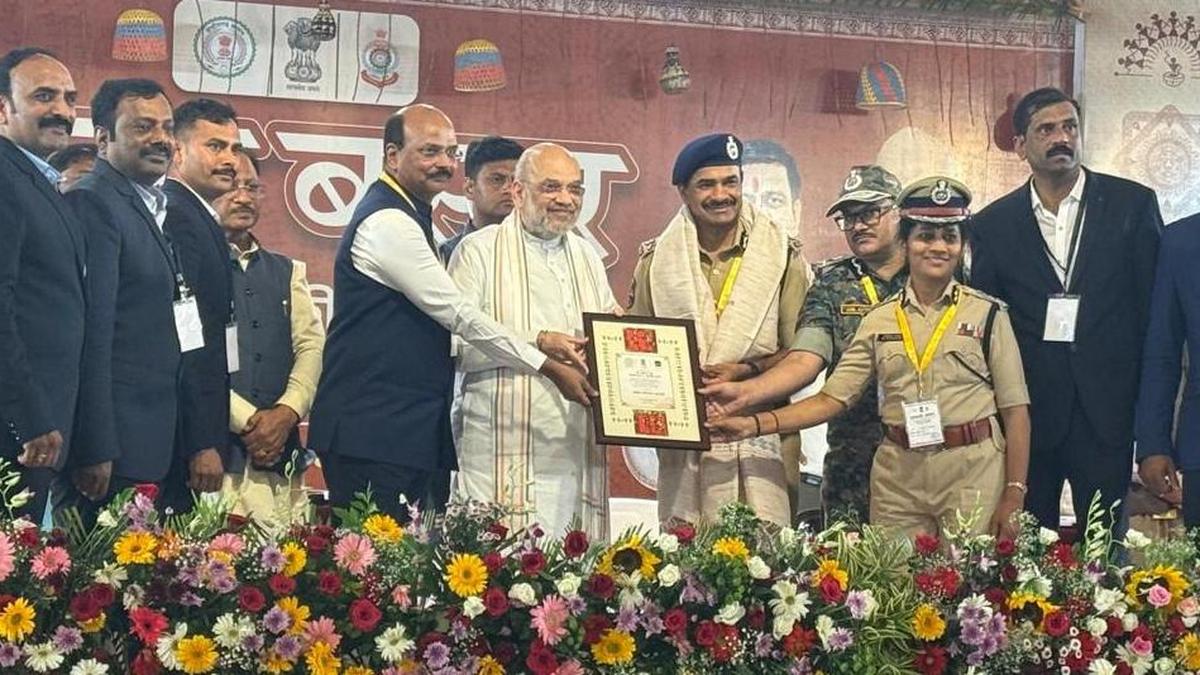
By Union Home Minister Amit Shah on Monday praised the efforts of Telangana Police and security agencies in curbing Maoist activity, saying the success of anti-Naxal operations reflected years of coordinated planning, intelligence-sharing and ground-level action. Speaking at a special event in Jagdalpur, Chhattisgarh, Shah felicitated senior Telangana police officers for their contribution to making the state free from Left-Wing Extremism.
The event carried symbolic importance as the Centre continues its nationwide campaign against Naxal violence. Senior officers, including Telangana Director General of Police C.V. Anand, State Security Advisor B. Shivadhar Reddy, DGP Operations Anil Kumar and Malkajgiri Police Commissioner B. Sumathi, were among those honoured during the ceremony. Members of the State Intelligence Bureau team were also recognised for their role in intelligence-based operations.
Addressing officers and security personnel, Shah said the Centre had adopted a clear and time-bound strategy to eliminate Naxalism from the country. He recalled that during a review meeting held in January 2024, the government had fixed March 31, 2026, as the target date for ending Maoist violence nationwide.
According to Shah, many observers had initially questioned whether such an ambitious target could realistically be achieved. However, he said the combined efforts of state police forces, central security agencies and local administrations helped change the situation on the ground. Referring to Bastar’s transformation, the Home Minister described Chhattisgarh’s progress as a major milestone in India’s long battle against insurgency.
He also highlighted the heavy human and economic cost of Naxal violence over the decades. Large parts of central India had witnessed disrupted development, fear among civilians and loss of opportunities for younger generations because of extremist activities, Shah said. He added that the sacrifices made by security personnel across different states played a crucial role in restoring stability in affected regions.
The Home Minister noted that Naxalism was never limited to a single state and had long remained a national security concern. He said even states like Gujarat had once faced the threat indirectly, making coordinated national action necessary.
The programme in Jagdalpur was attended by senior officials from the Union government, state administrations and various security agencies involved in anti-Naxal operations. Officials described the recognition of Telangana Police as an acknowledgment of successful inter-state cooperation and intelligence-driven policing that significantly weakened Maoist networks in the region.
Meta Title
Meta Description