
 By
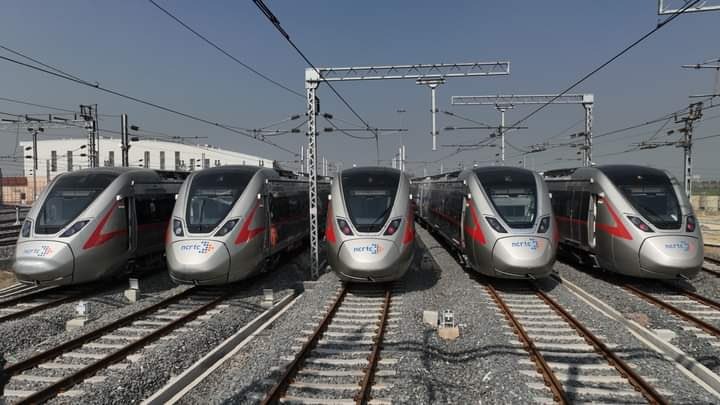
By The Centre has taken a major step towards expanding India’s regional rapid transit network by granting in-principle approval for the proposed extension of the Delhi-Meerut Namo Bharat corridor to Haridwar and Rishikesh. If implemented, the new high-speed rail link is expected to significantly improve travel between Delhi-NCR and two of North India’s most important pilgrimage destinations while opening fresh opportunities for economic development across western Uttar Pradesh and Uttarakhand.
Although the project is still in its planning phase, officials believe the proposed corridor could become much more than a transportation upgrade. By connecting major urban centres, industrial towns and religious hubs through a fast regional rail network, the project has the potential to strengthen tourism, encourage investment, improve logistics and support long-term regional growth.
The proposed extension will cover nearly 150 kilometres, beginning from Modipuram, the northern terminal of the operational Delhi-Meerut Namo Bharat corridor. From there, the route is expected to pass through Daurala, Khatauli, Muzaffarnagar and Purkazi, before entering Uttarakhand and continuing through Roorkee and Haridwar, eventually terminating near Laxman Jhula in Rishikesh.
According to officials, around 72 kilometres of the alignment will fall within Uttar Pradesh, while nearly 78 kilometres will pass through Uttarakhand. A Detailed Project Report (DPR) is currently being prepared to determine the final route alignment, station locations, engineering requirements, land acquisition and project cost.
The proposal gained momentum after discussions between the Uttarakhand government and the Centre regarding improved regional connectivity. Both the Uttar Pradesh and Uttarakhand governments, along with the National Capital Region Transport Corporation (NCRTC), are working together on the planning process. Uttarakhand has also appointed a nodal officer to coordinate the project with the concerned agencies.
If approved after the DPR stage, the corridor will integrate directly with the existing Delhi-Meerut Namo Bharat network. This would allow passengers travelling from Haridwar and Rishikesh to access major stations such as Ghaziabad, Anand Vihar and Sarai Kale Khan without changing transport modes. Future integration with upcoming Namo Bharat corridors, including Delhi-Panipat and Ghaziabad-Noida International Airport, is also being explored.
One of the biggest advantages of the project could be a significant reduction in travel time. At present, the road journey between Delhi and Rishikesh generally takes five to six hours, depending on traffic conditions. Since Namo Bharat trains are designed to operate at speeds of up to 160 kmph, the travel time could potentially come down to around two-and-a-half to three hours.
Such improved connectivity is expected to benefit multiple groups, including business travellers, daily commuters, tourists and pilgrims. Faster and more predictable travel could also encourage weekend tourism from Delhi-NCR while making inter-city business travel more efficient.
The total investment for the project has not yet been announced, as the final estimate will depend on the DPR. For comparison, the existing 82.15-kilometre Delhi-Ghaziabad-Meerut RRTS corridor was developed at a cost of approximately ₹30,274 crore through funding from the Centre, state governments and international financial institutions. Given the longer proposed route, the new extension is expected to require a substantially larger investment.
Experts also believe the project could reshape the economic landscape of the region. Improved transport infrastructure often attracts industrial investment, logistics hubs, commercial development and new residential projects around railway stations. Cities such as Muzaffarnagar and Roorkee could benefit from increased business activity, while Haridwar and Rishikesh may witness greater demand for tourism-related infrastructure and hospitality projects.
For Uttarakhand, the corridor could provide a major boost to its tourism economy. Haridwar and Rishikesh receive millions of visitors every year, particularly during the Char Dham Yatra, the Kumbh Mela, and other religious events. A high-speed rail alternative would help ease pressure on congested highways while providing a faster, safer and more reliable travel option for pilgrims and tourists alike.
While construction timelines will only become clear after completion of the DPR and subsequent approvals, the proposed Delhi-Rishikesh Namo Bharat extension represents a significant step towards expanding India’s regional rapid transit network and strengthening connectivity between the National Capital Region and the Himalayan gateway.