
 By
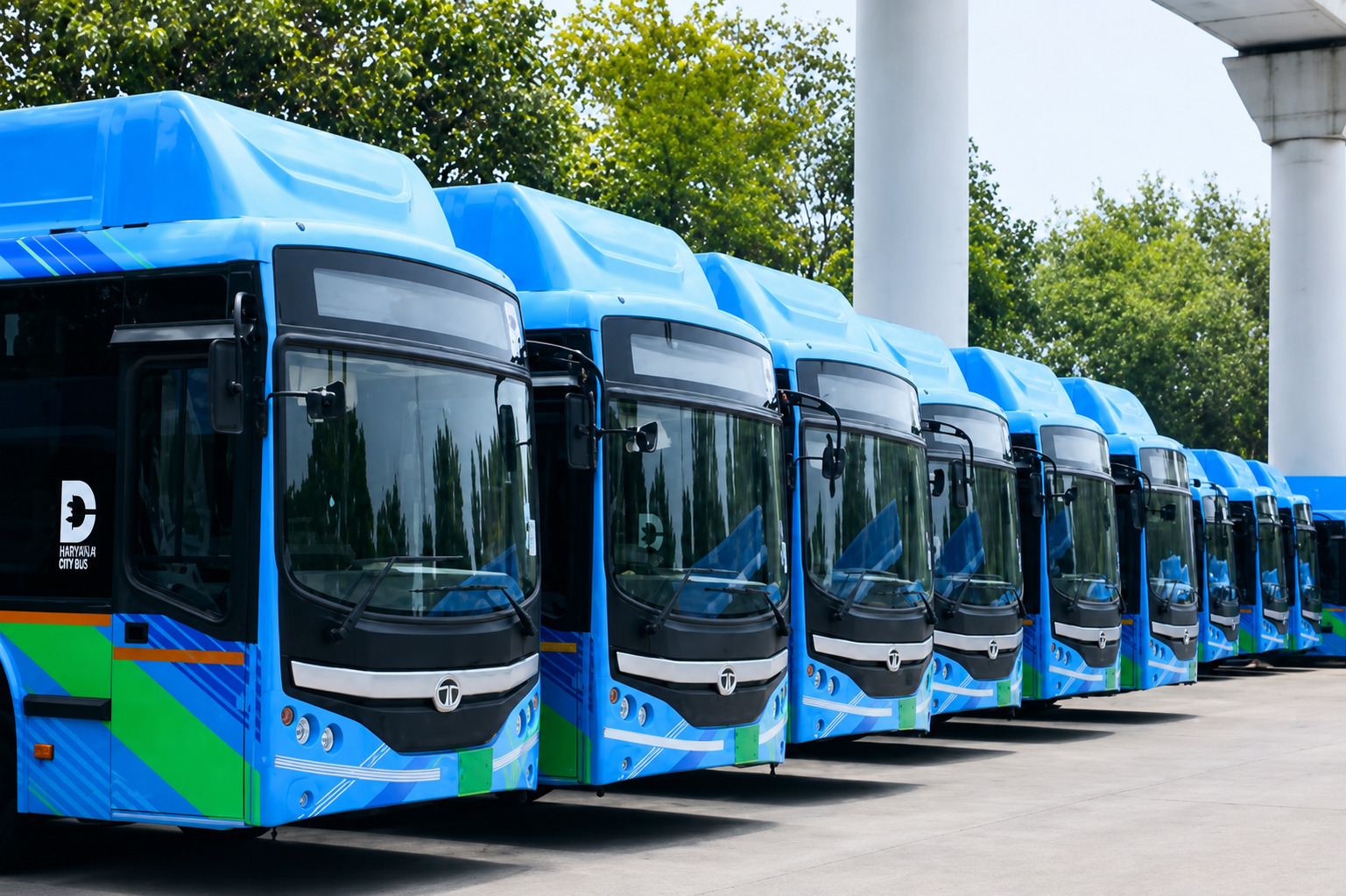
By Haryana is preparing for a major shift in urban public transport, with the state government planning to replace conventional city buses with electric vehicles across several key districts over the next two years. The move is aimed at reducing pollution, improving public transport services, and promoting cleaner mobility across cities, particularly in the National Capital Region (NCR).
Officials are working on a phased transition that will initially cover cities such as Gurugram, Faridabad, Sonipat, Rewari and Palwal. Alongside metro expansion and the proposed Namo Bharat rail network, the electric bus initiative is expected to become a key component of Haryana’s long-term urban transport strategy.
As part of the plan, the government has started upgrading bus terminals and developing charging infrastructure to support the upcoming electric fleet. The transition is expected to reduce dependence on CNG-powered buses while lowering fuel costs and helping tackle worsening air pollution in the NCR region.
The state has already introduced electric buses into the road transport network in cities including Sonipat and Rewari. Authorities are now accelerating preparations to extend similar services to other urban centres in Haryana.
According to the government’s proposal, nearly 1,500 new electric buses are expected to be procured in the initial phase, with the possibility of increasing the fleet based on future demand. Simultaneously, the state plans to expand its EV charging network so that charging stations are available at intervals of around five to ten kilometres across major urban areas.
The push towards electrification is also expected to extend beyond public transport. The Haryana government is exploring measures to encourage electric mobility in the agricultural sector by promoting the manufacturing of electric tractors within the state. Discussions are reportedly underway with three companies interested in setting up production facilities.
Officials are also considering a subsidy of up to ₹5 lakh for farmers purchasing electric tractors. In addition, modern EV charging stations are planned across every district to support the growing adoption of private electric vehicles, reinforcing Haryana’s broader commitment to clean energy and sustainable transportation.