 By
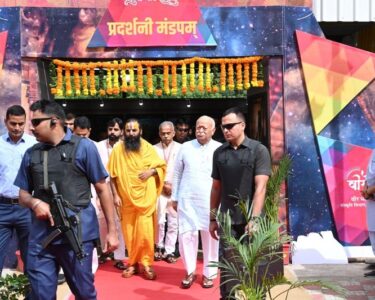
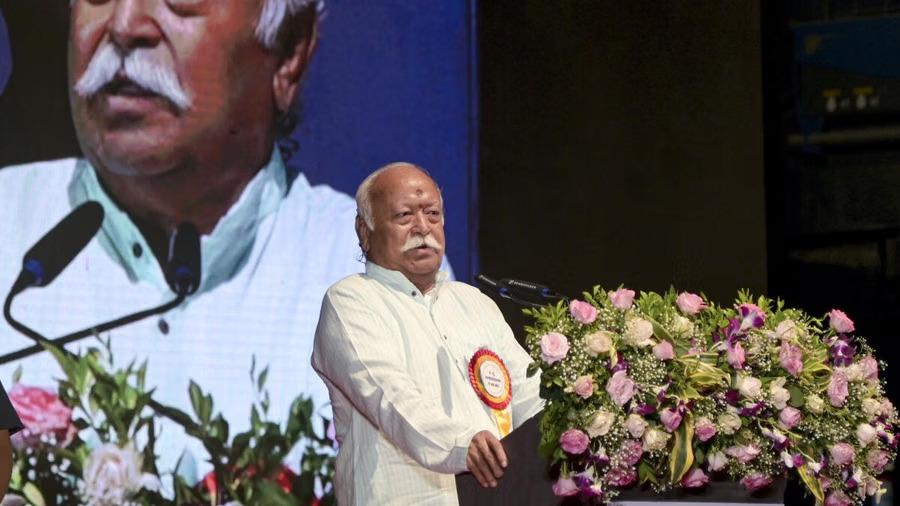
By Rashtriya Swayamsevak Sangh (RSS) chief Mohan Bhagwat on Monday said that India does not require any formal declaration to be called a Hindu Rashtra, asserting that the country already embodies that identity in its civilisational ethos. His remarks came during a felicitation event in Nagpur, where individuals associated with the construction of the Ram Temple in Ayodhya were honoured.
Speaking at the event organised by the Dr Hedgewar Smarak Samiti in Reshimbagh, Bhagwat framed the Ram Temple as a symbol of collective national effort rather than just a political or religious milestone. He credited both the leadership at the helm and widespread public participation for making the long-awaited project a reality.
Referring to the construction of the Ram Temple Ayodhya, Bhagwat said such a monumental task was possible only because of a shared resolve across society. Drawing a parallel from Hindu mythology, he compared it to Lord Krishna lifting the Govardhan mountain—an act often seen as divine, but one that, he noted, also symbolises collective contribution.
He suggested that while divine will plays a role, it is the participation of people that brings such visions to life. According to him, every section of society contributed in some way to the temple’s completion, making it a reflection of national unity and faith.
Bhagwat also linked the temple movement to a broader idea of cultural resurgence. He said the revival of Sanatan Dharma is closely tied to the rise of Bharat as a strong and confident nation—an idea he noted had been articulated over a century ago by thinkers like Sri Aurobindo. He traced the roots of this resurgence back to the period following 1857, describing it as a long, ongoing process.
Touching upon contemporary politics, Bhagwat referred to the leadership under Narendra Modi, suggesting that committed governance played a key role in turning long-standing aspirations into reality. He posed a rhetorical question on whether the Ram Temple could have been built without determined leadership, indicating that both public support and political will were crucial.
On the question of formally declaring India a Hindu Rashtra, Bhagwat argued that such labels are unnecessary when the reality is already evident. He likened it to stating an obvious natural truth, suggesting that India’s identity is deeply rooted in its cultural and spiritual traditions, which are widely acknowledged.
He also noted that ideas once dismissed or ridiculed—such as describing India as a Hindu Rashtra—are now being discussed more openly. According to him, this shift reflects changing perceptions and a growing acceptance of cultural identity.
Concluding his address, Bhagwat called for continued efforts to strengthen the nation, urging citizens to contribute towards making India more prosperous and globally influential. He emphasised that the country’s future trajectory depends on the collective will and participation of its people.