 By
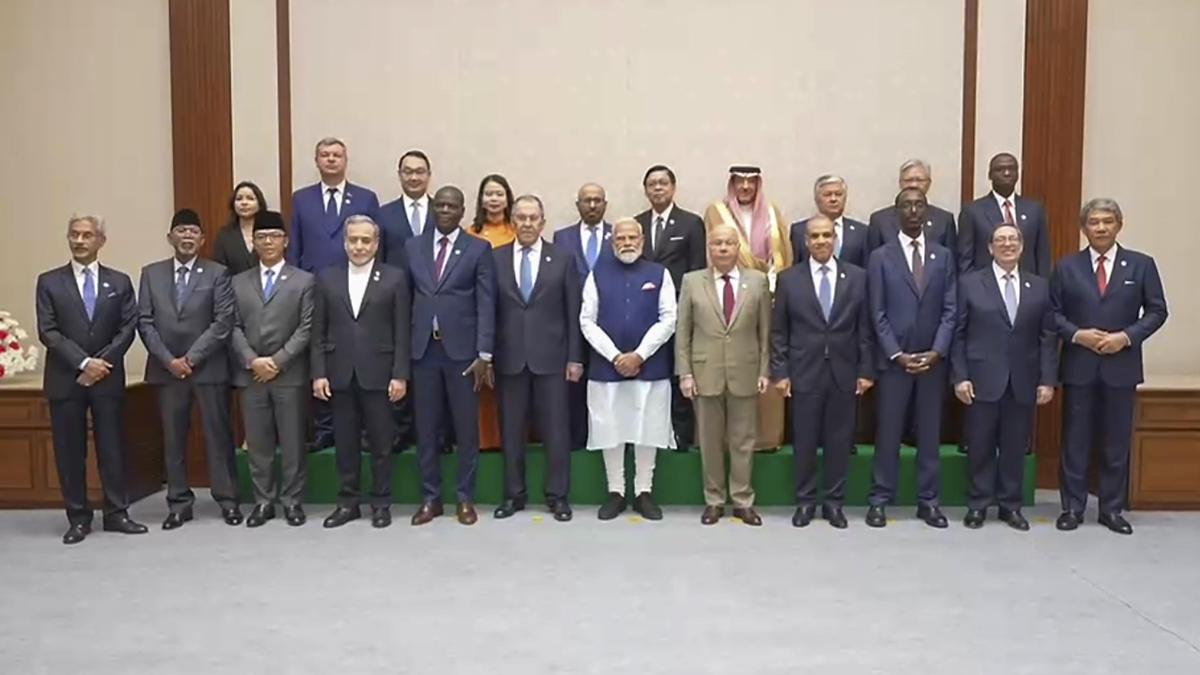
By As global tensions continue to reshape economic and diplomatic equations, Prime Minister Narendra Modi on Thursday held a key meeting with Foreign Ministers from BRICS nations in New Delhi, signalling India’s intent to play a larger role in shaping discussions around global stability, trade and energy security.
The high-level interaction came at the start of the two-day BRICS Foreign Ministers’ conclave being hosted by India, which currently chairs the grouping. The meeting assumes added importance at a time when conflicts in West Asia, disruptions in energy supply chains and growing uncertainty in global trade have become major concerns for emerging economies.
Among the leaders who met the Prime Minister were Russian Foreign Minister Sergey Lavrov, Iran’s Foreign Minister Abbas Araghchi, Brazil’s Mauro Vieira, Indonesia’s Sugiono and South Africa’s Ronald Lamola.
Officials said the discussions focused on strengthening cooperation among developing economies and addressing rapidly changing geopolitical challenges. India used the platform to underline the importance of dialogue, diplomacy and multilateral coordination in dealing with ongoing conflicts and economic instability.
During his separate meeting with Lavrov, Modi reviewed the progress in India-Russia ties following his summit-level talks with Russian President Vladimir Putin held in late 2025. The two sides also exchanged views on the Ukraine conflict and the evolving situation in West Asia.
According to the Prime Minister’s Office, Modi reiterated India’s consistent position that disputes should be resolved through diplomacy and peaceful engagement. The conversation also covered strategic cooperation, trade and regional developments affecting global markets.
The BRICS gathering in New Delhi is being closely watched internationally because several member nations are directly impacted by rising energy prices and disruptions caused by ongoing geopolitical conflicts. Discussions are expected to focus heavily on alternative trade mechanisms, financial cooperation and ways to reduce dependence on volatile global supply chains.
Originally formed by Brazil, Russia, India, China and South Africa, BRICS has expanded significantly in recent years. The bloc now includes Egypt, Ethiopia, Iran, the United Arab Emirates and Indonesia, making it one of the largest geopolitical and economic groupings in the world.
Collectively, BRICS nations now account for nearly half of the world’s population and a substantial share of global GDP and trade. India’s leadership during this year’s chairmanship is expected to focus on economic resilience, technology partnerships and stronger South-South cooperation.
The Foreign Ministers’ meeting is also being seen as a precursor to the full BRICS Summit scheduled later this year, where several crucial decisions on trade, connectivity and strategic coordination are likely to be discussed.