
 By
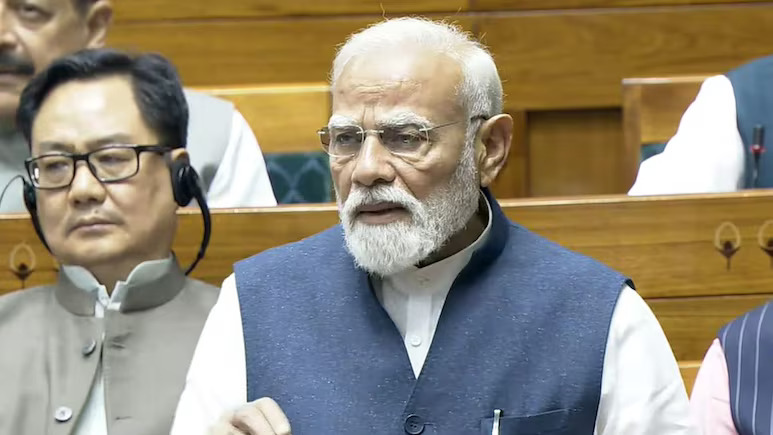
By Prime Minister Narendra Modi on Thursday sought to calm growing political tensions over the proposed delimitation exercise, assuring that no state would face discrimination when parliamentary boundaries are redrawn. Speaking in Parliament, he stressed that the Centre views India as a unified whole and not as competing regions.
His remarks come at a time when several southern states have raised concerns that a fresh delimitation could reduce their representation in the Lok Sabha, especially when compared to more populous northern states. Addressing these fears directly, Modi said the government is committed to ensuring fairness across regions. “No injustice will be done—from north to south, east to west,” he said, attempting to counter the narrative that some states could lose political weight.
The debate around delimitation has resurfaced as part of a broader legislative push that includes proposals to expand the number of Lok Sabha seats and introduce 33% reservation for women. According to government sources, the planned expansion of seats is expected to maintain the proportional representation of states, even as the total number of constituencies increases significantly.
Modi also used the opportunity to strongly advocate for the women’s reservation measure, urging lawmakers to rise above political differences. He pointed out that the idea of reserving seats for women in legislatures has been discussed for decades but has not been implemented. Suggesting that the moment should not be lost again, he framed the proposal as a step toward strengthening democratic participation.
In a subtle dig at opposition parties, including the Indian National Congress, the Prime Minister said those who had previously opposed such reforms had faced electoral consequences. He also mocked criticism over credit for welfare initiatives, saying he was willing to let others claim recognition if it helped push forward important reforms like women’s representation.
Opposition leaders, however, have remained unconvinced. Mallikarjun Kharge described the proposals as problematic, arguing that combining delimitation with other major changes could undermine democratic balance. Critics have also warned that states which successfully controlled population growth could be penalised under a new seat distribution formula.
The issue is particularly sensitive in southern states, where leaders fear that demographic differences could translate into reduced influence at the national level. With elections approaching in some regions, the debate has taken on added political significance.
As Parliament takes up these contentious bills, the government’s assurances are likely to be closely scrutinised. While Modi has positioned the reforms as necessary for a stronger and more inclusive democracy, the opposition continues to question both the timing and the structure of the proposals.