
 By
By India is preparing for a major transformation in its border security framework, with Union Home Minister Amit Shah announcing an ambitious plan to create a technology-driven security network aimed at preventing infiltration and strengthening surveillance along sensitive frontiers.
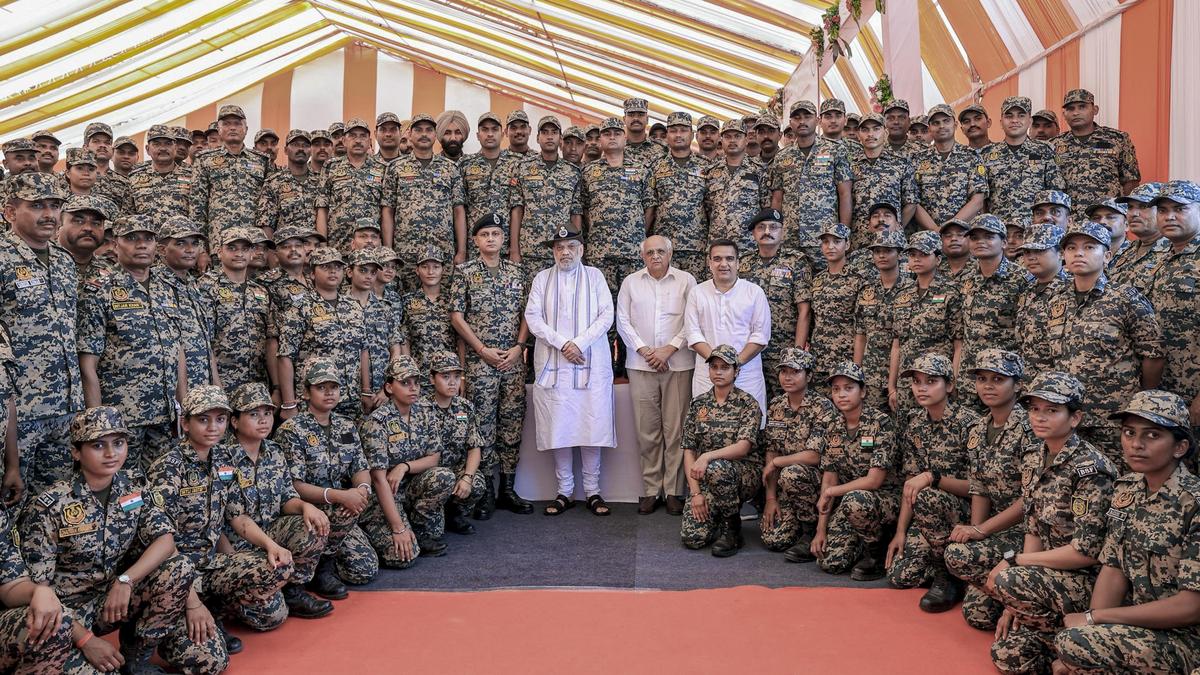
Speaking during the inauguration of two Border Security Force (BSF) outposts in Gujarat’s Bhuj region, Shah said the government is moving beyond traditional border guarding methods and working towards a comprehensive security model that combines technology, local administration, security agencies, and public participation. According to him, the new system is designed to ensure that border breaches become increasingly difficult in the future.
The Home Minister outlined a new “territorial security” approach, under which border protection will not remain the sole responsibility of the BSF. Instead, local communities, civil administration, police forces, and the armed forces will work in close coordination to strengthen security infrastructure and intelligence gathering in border areas.
At the heart of the plan is the Smart Border Security Project, a large-scale initiative involving advanced surveillance technologies such as drones, radar systems, watchtowers, smart sensors, and modern monitoring equipment. Shah said the government is investing substantial resources to build a security grid capable of detecting and responding to threats more effectively.
Highlighting challenges on the eastern frontier, Shah pointed to incomplete fencing along parts of the West Bengal border as a key vulnerability. He said efforts are underway to accelerate fencing work and deploy technological solutions in difficult terrains, including dense forests and riverine stretches, where traditional fencing is not always feasible. The objective, he noted, is to create a seamless security network across the entire border.
The Home Minister also praised BSF personnel for serving in some of the country’s harshest environments. From the freezing conditions of northern regions to the scorching deserts of western India, he said the force continues to protect the nation under extremely demanding circumstances. He specifically referred to challenging locations such as the Kutch desert, Sir Creek, Harami Nala, and the sand dunes of Rajasthan.
Shah further highlighted recent efforts to improve infrastructure in vulnerable border regions. These include new roads, watchtowers, drinking water facilities, medical support systems, upgraded accommodation, and enhanced fencing. He expressed confidence that ongoing projects would significantly strengthen security in strategically important areas over the next two years.
He also noted growing public appreciation for the BSF’s work, citing a visitor centre in Banaskantha that has attracted large numbers of citizens interested in learning about the force’s role and responsibilities.
As the government pushes ahead with its modernization drive, border security is set to become a key focus area, combining technology, infrastructure, and community participation to create a stronger and more resilient defence network.