
 By
By Bihar is on the cusp of a major political shift as Samrat Choudhary prepares to take over as the state’s next Chief Minister, following Nitish Kumar stepping down to move to the Rajya Sabha. The development signals a significant transition in the state’s political landscape, where Nitish Kumar had remained the central figure for nearly two decades.
Choudhary’s elevation is particularly noteworthy as it marks the first time a Bharatiya Janata Party leader will occupy the top post in Bihar. His selection as leader of the BJP legislative party earlier this week has effectively cleared the path for him to assume office, with a formal announcement expected after a meeting of the NDA legislators.
At 57, Choudhary is no newcomer to Bihar politics. Known for his assertive style and organisational grip, he has steadily built his stature within the BJP since joining the party in 2017. Currently holding the Home portfolio in the state government, he has been a visible face of the NDA, often representing the BJP in both administrative and political forums alongside Nitish Kumar.
Born into a politically active family, Choudhary is the son of veteran leader Shakuni Choudhary. His political journey has seen multiple shifts—he was previously associated with parties like the Rashtriya Janata Dal and Janata Dal (United) before making a decisive move to the BJP. That switch proved to be a turning point, accelerating his rise within the party ranks.
His appointment as Bihar BJP president in 2023 further cemented his position as a key strategist. Later, as Deputy Chief Minister in the NDA government formed after the 2025 Assembly elections, he played a central role in governance and electoral planning. His victory from the Tarapur constituency reinforced his standing as a strong grassroots leader.
Choudhary is also seen as an influential OBC face for the BJP, particularly among the Koeri-Kushwaha community, which holds considerable sway in Bihar’s electoral politics. This social equation, combined with his political aggression, has made him a crucial part of the BJP’s expansion strategy in the state.
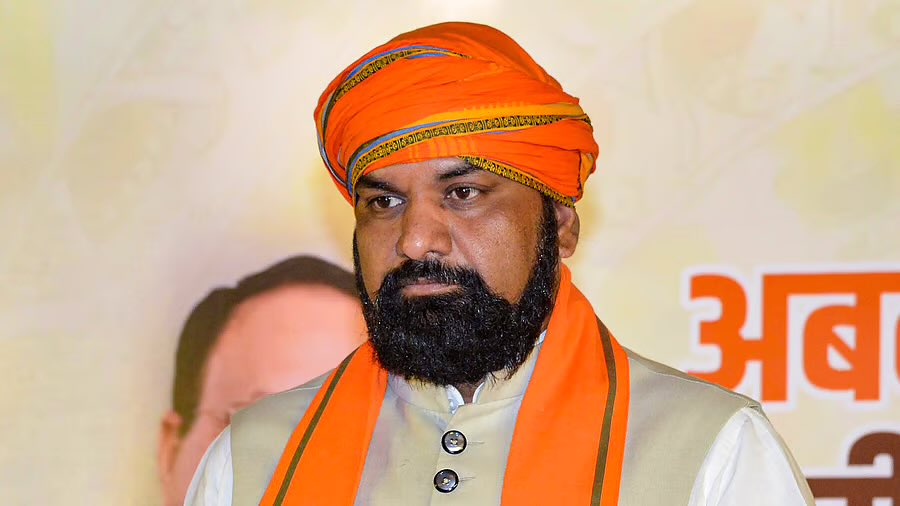
Interestingly, his relationship with Nitish Kumar has evolved over time. Once one of Kumar’s sharpest critics, Choudhary had famously vowed not to remove his saffron turban until the JD(U) leader was out of power. However, political equations shifted after the BJP-JD(U) alliance returned to power, symbolising a broader realignment in Bihar politics.
With Choudhary now set to take charge, the BJP appears ready to assert a more direct leadership role in the state. His appointment comes at a time when the party is looking to strengthen its base and shape a new political narrative in Bihar beyond the long-standing Nitish Kumar era.