
 By
By Prime Minister Narendra Modi’s visit to the iconic Afsluitdijk dam in the Netherlands during his Europe tour was more than a diplomatic stopover. The visit highlighted India’s growing focus on climate resilience, water security and next-generation infrastructure planning at a time when extreme weather events are becoming a global challenge.
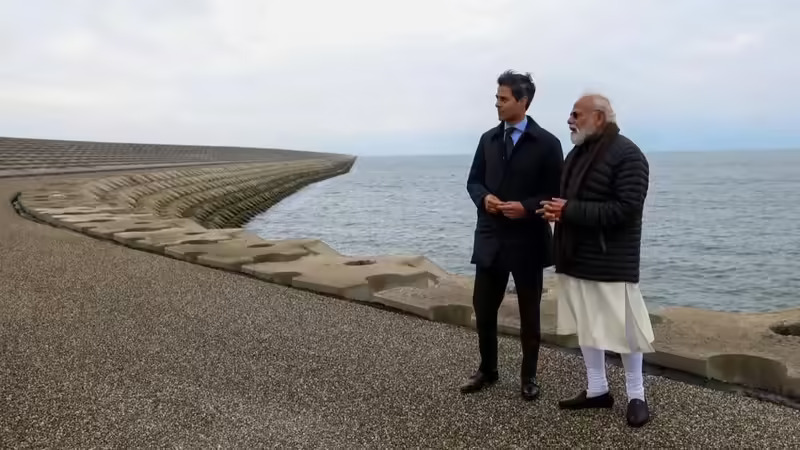
Accompanied by Dutch Prime Minister Rob Jetten, PM Modi toured the massive engineering structure that has protected the Netherlands from floods for decades while also supporting freshwater storage, inland waterways and renewable energy generation. The visit reflected India’s interest in learning from one of the world’s most advanced water management systems.
Calling the Netherlands a global leader in water engineering, PM Modi said countries across the world could learn from Dutch expertise in flood protection and water conservation. He stressed that India is committed to using modern technology to improve irrigation systems, strengthen flood defence and expand inland water connectivity.
The visit assumes special significance for India because of Gujarat’s ambitious Kalpasar Project, one of the country’s largest proposed water infrastructure plans. According to the Ministry of External Affairs, the Dutch experience with the Afsluitdijk could offer valuable insights for the mega project planned across the Gulf of Khambhat.
The Afsluitdijk, a 32-kilometre barrier dam, was originally built nearly eight decades ago to protect large parts of the Netherlands from sea flooding. Over time, it evolved into a multi-purpose infrastructure system supporting transportation, freshwater storage, navigation and sustainable energy projects.
Today, the Dutch government is modernising the structure through the “Afsluitdijk 2.0” programme, designed to prepare the country for future climate risks and rising sea levels. The upgraded project combines flood protection with renewable energy technologies, environmental conservation and improved water discharge systems.
For India, especially coastal states like Gujarat, the Dutch model offers an example of how infrastructure can address multiple challenges simultaneously. The proposed Kalpasar Project aims to create a massive freshwater reservoir by constructing a dam across the Gulf of Khambhat. The stored water would support irrigation, drinking supply and industrial use in water-stressed regions of Gujarat.
The project also proposes a large transport corridor that could significantly reduce travel distance between South Gujarat and Saurashtra. Though still under study, Kalpasar is seen as a long-term solution for water scarcity, salinity intrusion and regional connectivity.
Experts say PM Modi’s visit underlines a broader shift in India’s infrastructure vision. With climate change increasing the risks of floods, droughts and unpredictable monsoons, India is now looking at integrated solutions rather than isolated projects.
The Prime Minister’s focus on learning from global best practices also signals India’s intent to build future-ready infrastructure capable of handling both economic growth and environmental pressures. Officials believe cooperation with the Netherlands in water engineering and climate adaptation could play an important role in India’s long-term development strategy.
Beyond diplomacy, the Afsluitdijk visit showcased how India is increasingly prioritising sustainability, resilience and technology-driven infrastructure planning for the decades ahead.