
 By
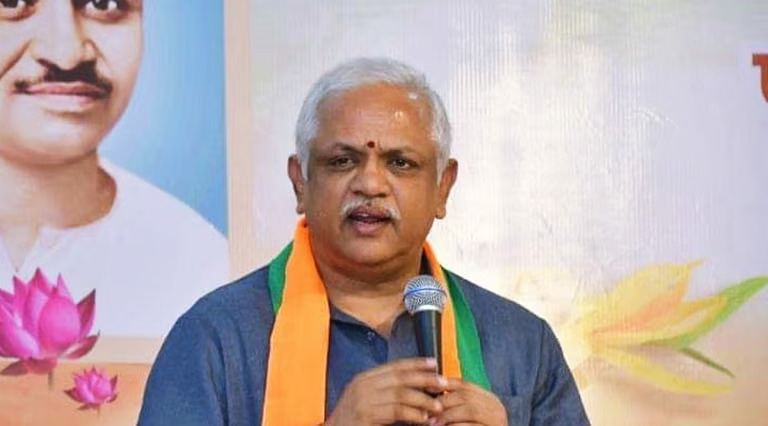
By BJP National General Secretary BL Santosh on Friday said the National Education Policy (NEP) has the potential to reshape India’s education system by freeing it from colonial influences, but cautioned that its full implementation will take time due to political resistance and structural challenges. Speaking at an international academic conference in Mysuru, Santosh described the NEP as a long-term reform tool that requires both government effort and societal acceptance to succeed.
Addressing the concluding session of the three-day Ekatma Manav Darshan – Bharat’s Worldview conference at Karnataka State Open University, Santosh highlighted that education reforms of this scale cannot be implemented overnight. He said electoral cycles, differing political ideologies among states, and administrative hurdles have slowed the rollout of the policy, making the journey gradual and sometimes uneven. According to him, the government can create a framework, but the real success of the NEP depends on how educational institutions and society adopt its principles.
Santosh placed the discussion in a broader historical context, arguing that India’s education system has been shaped by colonial influence for centuries and that meaningful change requires sustained effort over decades. He said decolonising education is not a short-term project and may take up to 50 years of consistent effort to fully transform academic thinking, curriculum design, and institutional structures. The focus, he noted, should be on building a system rooted in Indian knowledge traditions while remaining globally relevant.
He also pointed to political resistance in some states, saying that disagreements over ideology and governance models have led to varied approaches in implementing the NEP. Despite these challenges, Santosh expressed confidence that the policy would gradually gain acceptance as its benefits become more visible, particularly in areas like skill development, mother-tongue-based learning, and interdisciplinary education.
Speaking on the conference theme “Philosophy to Policy: Contemporary Geopolitics, Economics and Civilisation Challenges,” Santosh stressed that ideas such as Ekatma Manav Darshan should move beyond academic discussions and influence policymaking and public life. He argued that philosophical frameworks must translate into practical solutions that address social and economic challenges faced by the country.
Highlighting the continued influence of Western thought on education and policymaking, Santosh said the biggest challenge lies in changing mindsets. He noted that while institutions and policies can be reformed, transforming intellectual and cultural perspectives requires deeper societal engagement. According to him, building confidence in India’s own civilisational values is essential for creating a balanced and self-reliant education system.
The conference brought together scholars, policymakers, and academics to discuss the intersection of philosophy, education, and governance, with the NEP emerging as a central theme in debates on India’s future academic direction.